


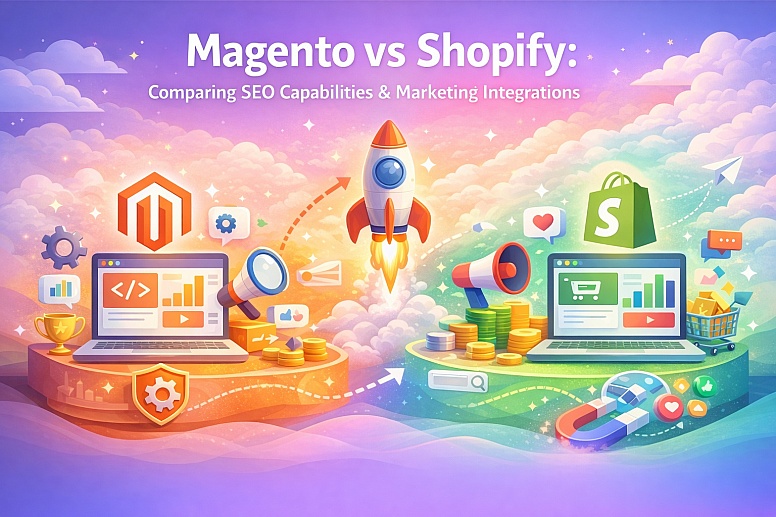
Magento vs Shopify: SEO Capabilities & Marketing Integration
When you start digging into the SEO foundations of Magento and Shopify, it effectively becomes a debate of boundless control versus streamlined efficiency. Magento, which is often favored by technical experts, offers a depth of customization that allows you to tweak practically every facet of your site’s architecture, from the .htaccess file to complex canonical tag logic (it’s honestly a bit overwhelming sometimes!).
In contrast, Shopify handles the heavy lifting for you, automatically generating sitemaps and ensuring clean code, though it arguably forces you into a somewhat rigid URL structure that can frustrate advanced SEO strategists. Doesn't that just sound like the classic "freedom vs. convenience" trade-off we see everywhere?
While Shopify shines for getting a store indexable immediately without touching a line of code, Magento remains the heavyweight champion for those needing granular control over international SEO or massive, complex product catalogs. It’s worth noting that "out of the box" readiness is great, but sometimes you just need to break the box, right?
We will compare the SEO capabilities and marketing integrations of Magento and Shopify to help you identify which platform better aligns with your growth strategy.
Magento
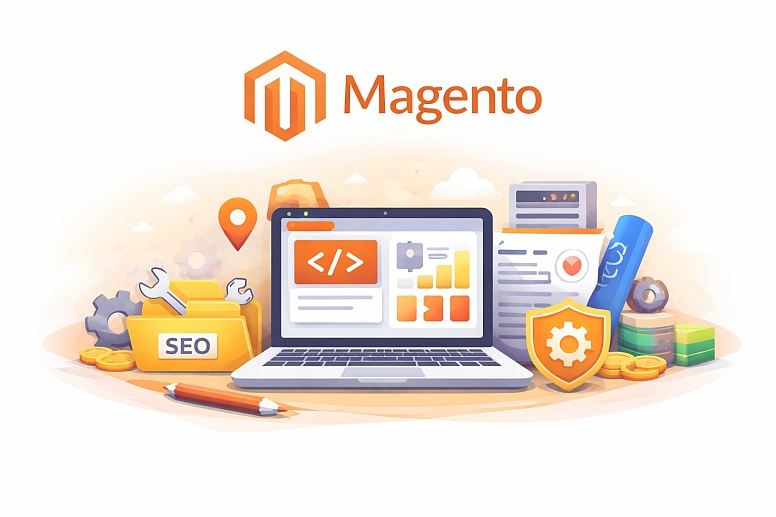
Magento Overview and SEO Control
When looking at the sheer scope of customization, Magento often feels like a beast that requires a firm hand to tame. While Shopify handles the technical heavy lifting for you automatically, sometimes a business needs to get deep into the server configurations to really maximise its search visibility. It depends largely on how much control you want over your canonical tags and site architecture.
Simplicity is not always the answer when you are managing thousands of SKUs! I often think of Shopify as a rented apartment where you can’t knock down walls, whereas Magento gives you the blueprints to build the whole house from scratch. From a professional standpoint, the ability to edit the .htaccess file or manage complex rewrites directly in Magento offers an edge for granular SEO strategies that hosted platforms struggle to match.
However, you must be ready for the learning curve. Shopify has improved significantly in this area, but it still relies heavily on apps to do what Magento does natively.
Marketing Integrations and Ecosystem
Have you ever tried to integrate a bespoke ERP system with a standard eCommerce platform? Integrating complex marketing tools or custom CRM software tends to be far more flexible within the Magento environment because the open-source nature allows developers to write custom API endpoints without hitting a wall.
On the other hand, Shopify makes connecting to Google Analytics or Facebook Ads almost suspiciously easy. It’s actually kind of amazing how fast a novice can launch a retargeting campaign!
But there is a catch regarding the long-term performance cost. Relying on too many third-party marketing apps in Shopify can eventually bloat the code and hurt your page load speeds, which we know Google hates. (Nobody wants to wait for a landing page to load, right?) Native integrations in Adobe Commerce might cost more upfront, but they usually offer better stability.
The Final Verdict
If your organization has access to a dedicated Magento team, the ceiling for growth with Magento is practically non-existent. For smaller groups who just want to push product without worrying about the backend maintenance, it is probably better to stick with Shopify. Why make life harder than it needs to be?
Ultimately, the decision between these two giants usually comes down to a trade-off between the convenience of automated marketing suites and the raw power of total architectural freedom. You have to weigh the resources carefully. Both platforms can get you to the top of search results, but the path you take to get there looks very different. Choose the one that fits your workflow best.
Shopify
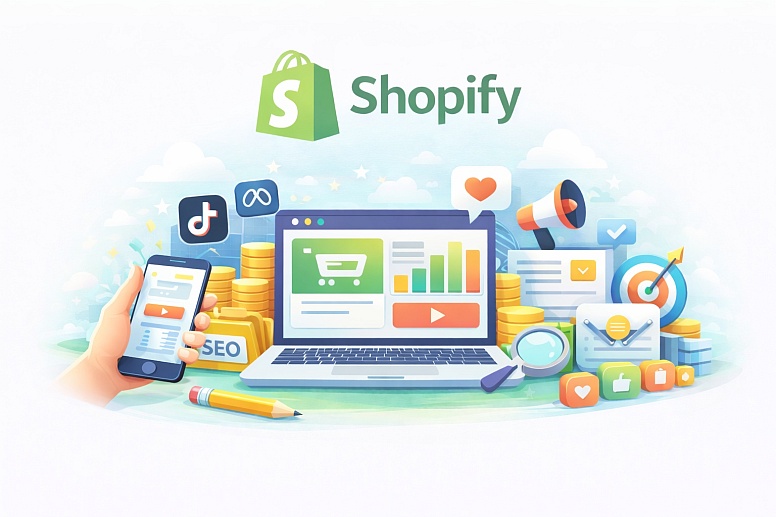
The SEO Landscape: Structured vs. Open Field
When evaluating search engine optimization capabilities, Shopify often feels like a well-paved road that guides you exactly where you need to go, whereas Magento is more like an expansive open field where you can build your own highway. It is a distinct difference in philosophy.
You might find Shopify’s URL structure a bit rigid, which can be frustrating for technical SEO experts who want full control over every single subfolder and string. But does that rigidity really matter for the average mid-sized business? Probably not, especially since the platform handles basic canonical tags and sitemaps right out of the box without you lifting a finger.
On the flip side, Magento allows deep customization of metadata and site architecture that is simply unmatched if you have Shopify developers on speed dial. I have seen enterprise brands leverage this flexibility to dominate niche keywords, yet it requires a level of maintenance that is exhausting for smaller teams. Learn more about how you can hire dedicated developers can help scale your store.
Marketing Integrations and Ecosystem Friction
Moving onto marketing integrations, the story changes slightly because Shopify really shine here with its massive App Store. The ecosystem is designed to minimize friction, allowing merchants to plug in Google Shopping, TikTok, or Meta ads in just a few clicks. It’s honestly impressive how fast you can launch a multi-channel campaign! While Adobe Commerce (that is the fancy name for Magento now) offers powerful integrations too, they often require heavy configuration or expensive middleware to work properly.
I suspect many users prefer the plug-and-play nature of Shopify simply because time is money. Why spend weeks configuring a data layer when you could be selling? However, for those who need granular data ownership and custom attribution models, the open-source nature of Magento is a goldmine. Efficiency usually wins over flexibility when you are trying to scale up marketing efforts quickly in Q4, but the choice ultimately depends on your internal resources.
The decisive factor between Magento and Shopify for SEO capabilities and marketing integrations really boils down to your company's technical fluency and scale, a classic trade-off between control and convenience.
For a burgeoning small-to-medium business prioritizing a quick market entry and minimal maintenance overhead, Shopify is simply the path of least resistance, offering excellent core SEO features right out the box—things like automatic sitemap generation and user-friendly meta tag editing—plus, its vast app store provides effortless, often single-click marketing integrations with leading email, social, and loyalty platforms, which is a big win for non-developers, right? However, this hosted SaaS model, while supremely easy, imposes structural limitations; for example, not having total control over URL paths, which can certainly frustrate an advanced SEO professional who demands granular architectural freedom.
In stark contrast, Magento (or Adobe Commerce, if we're being professional about it) stands out as the power user's platform, an open-source beast offering unparalleled flexibility and full control over every technical SEO lever you could possibly need. Think customizable robots.txt files, complete URL structure control, and the ability to implement highly complex, dynamic schema markup exactly as your developers envision, providing a superior foundation for enterprise-level, long-term organic growth.
The platform's open nature means marketing integration is only limited by your budget and the development time you're willing to invest—you can build bespoke, deeply customized connections to any system, which is a necessary capability for businesses managing sophisticated multi-channel operations or legacy internal tools. What's the catch, you ask? Well, all that glorious control comes with a very steep learning curve and a significant resource demand, necessitating dedicated development expertise to set up, optimize for performance, and continuously maintain.
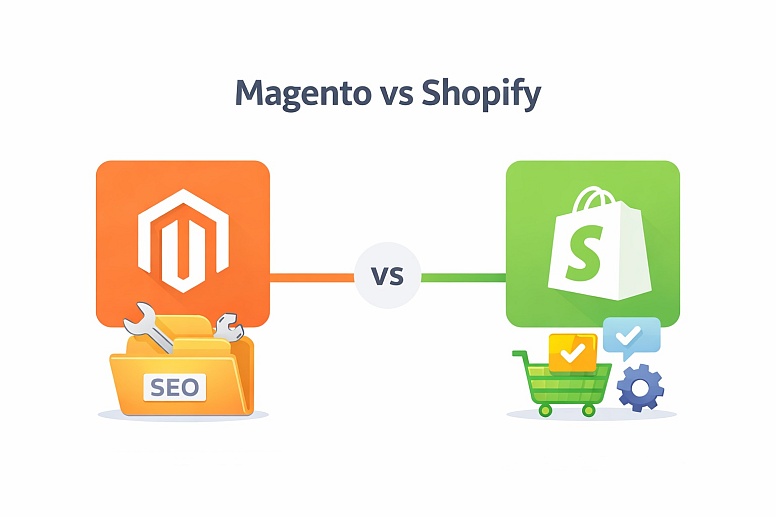
Ultimately, making the final choice requires a thoughtful, pragmatic assessment of your present and future requirements: If you're running an SMB where speed and ease of use trump bespoke customization, Shopify is your champion, offering a great balance of SEO features and immediate marketing access. Conversely, if your operation is an enterprise with complex, large catalogs and the technical team to back it, Magento remains the superior tool, capable of delivering the highest level of customization and granular control necessary for highly competitive or global SEO strategies.
Choosing the wrong one is like buying a Formula 1 car for city driving—it's overkill and unnecessarily complicated—so pick the platform that aligns best with your team's skillset, business size, and long-term digital strategy.






0.2589