



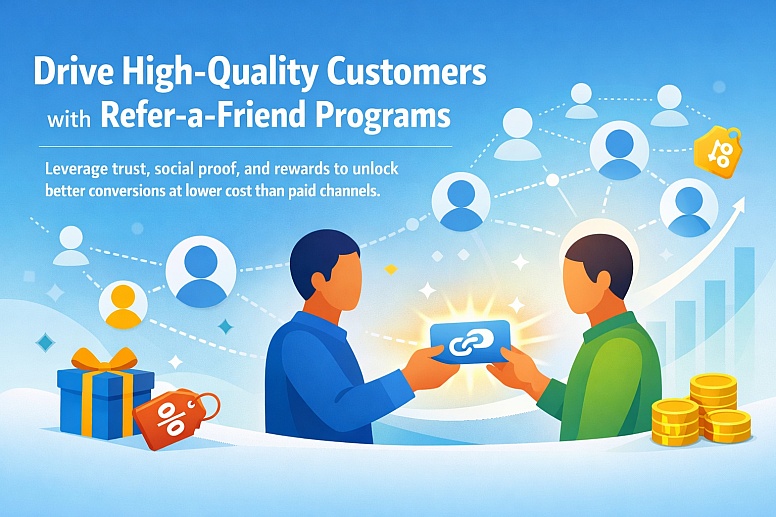
How Refer-a-Friend Programs Drive High-Quality Acquisition
Paid marketing channels are getting more expensive and less reliable for customer acquisition. Rising customer acquisition costs (CAC), shrinking attribution windows and declining ad trust have forced brands to rethink how they bring in new customers. Meanwhile, referral programs deliver higher-intent customers at a lower cost because they rely on trusted peer recommendations, shared social circles and real user credibility.
Refer a friend programs tap into the psychology of advocacy, social proof and interpersonal influence – three things modern paid advertising can’t replicate.
This guide shows how refer a friend programs outperform traditional acquisition methods and generate loyal, high lifetime value (LTV) customers. You’ll find clear explanations, strategic frameworks, psychological principles, real brand examples and actionable steps to design your own high-performing referral engine. We also show how Mention Me leads the market in loyalty-driven acquisition by identifying high-value advocates and proving LTV uplift through advanced analytics.
Why Quality Acquisition Matters Today
Quality acquisition is now a survival requirement for brands facing skyrocketing CAC across Meta, Google, TikTok and emerging channels. With tracking and attribution weakened by privacy changes, brands struggle to measure paid performance accurately, making budget allocation harder. Consumers also trust ads less than ever before, which reduces paid effectiveness even when targeting is strong.
In this landscape, brands must prioritise loyalty-driven, high-LTV acquisition. Referred customers dramatically outperform paid ones because they come with built-in trust, accurate expectations, and brand validation from someone they already know. This creates a compounding effect across the areas of retention and lifetime value.
What Is a Refer a Friend Program?
A refer a friend (RAF) program incentivises existing customers to introduce new customers using double-sided rewards and frictionless sharing mechanics. These programs rely on peer-based influence rather than algorithms, making them far more predictable and cost-effective than paid advertising. The journey is automated through referral software, such as ReferralCandy. Advocates get a reward for sharing, friends get an incentive for joining, and the brand gets a highly qualified customer.
RAF programs also create social proof, strengthen brand trust, and trigger advocacy loops that grow naturally over time. Mention Me takes the classic RAF model to the next level with advocate identification, A/B testing, LTV measurement, name-sharing (friend-recognition referrals), and personalised CTAs proven to drive higher conversion.
Why Refer a Friend Programs Attract Higher Quality Customers
- Trust Transfer From Advocate to New Customer: Referrals transfer trust instantly. Customers who join through a friend’s recommendation experience psychological validation, reducing the fear of trying a new brand.
- Higher Intent at the Point of Conversion: Referred customers convert at a higher rate because they enter warm, informed and confident. No cold ad or algorithmic audience can match this intent.
- Better LTV and Retention Rates: Referred customers stay longer and spend more because the initial relationship is trust-based. They also tend to become advocates themselves.
- Precise Targeting Through Social Circles: Friends share similar interests, lifestyles and values – making referral audiences naturally relevant and better aligned than paid targeting.
- Lower CAC Compared to Paid Social: Referral CAC is stable, predictable and often lower than paid ads, especially during seasonal spikes when paid channels become volatile.
- Referral Programs Generate Compounding Growth: One customer refers another, who then refers another, creating a viral coefficient that enhances long-term acquisition efficiency.
Real Examples of Quality Acquisition Through Referral Programs
Mention Me – Enterprise Referral Success: Mention Me identifies high-value advocates using predictive analytics, optimises sharing experiences through continuous A/B testing and proves LTV uplift with accurate referral attribution. Their unique name-sharing feature unlocks otherwise invisible referrals by letting friends recognise each other. Brands using Mention Me achieve predictable, high-quality acquisition at scale – far better than paid ads.
Glossier – Community to Advocacy Loop: Glossier built cult-like loyalty through community-first storytelling and leveraged that trust to drive peer referrals. Their RAF funnel turns loyal fans into active ambassadors.
Airbnb – Double-Sided Travel Credits: Airbnb’s referral engine rewarded both sender and receiver with travel credits. The system attracted high-quality, experience-driven users across markets and devices.
Stitch Fix – Subscription Referral Credits: Stitch Fix ties referral rewards to future subscription boxes. This creates a retention loop where new customers become long-term subscribers.
Bombas – Purpose-Driven Referrals: Bombas uses one-for-one donation incentives. Mission alignment increases trust, referral motivation and customer quality.
Rothy’s – Eco-Conscious Advocates: Rothy’s leverages a sustainability-driven audience. Shared values boost trust and lead to long-LTV customer cohorts.
The Science Behind High-Performing Refer-a-Friend Programs
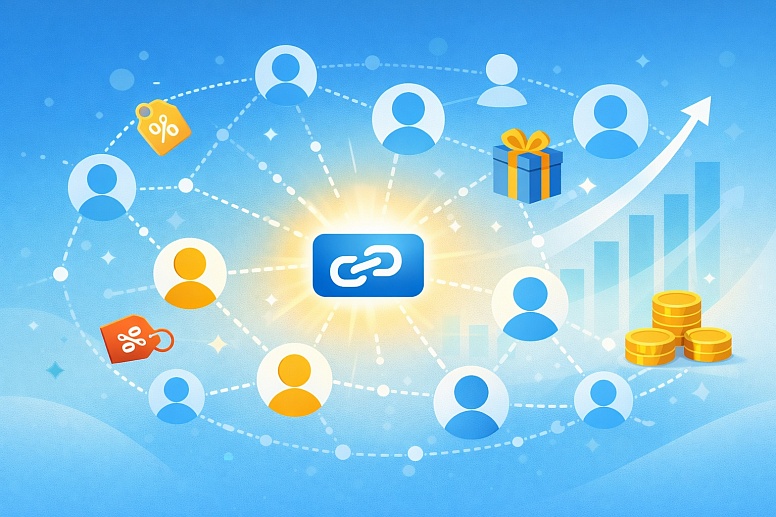
Social Proof: People share things that make them look good, informed or helpful to others.
Reciprocity: Double-sided rewards increase sharing because they benefit both parties.
Commitment & Consistency: Advocates reaffirm their identity when they recommend brands they love.
Emotional Contagion: Positive emotions—excitement, pride, delight—spread easily through social circles.
Identity and Belonging: Communities strengthen loyalty and produce customers who advocate repeatedly.
How to Build a Refer-a-Friend Program That Drives Quality Acquisition
- Define Your Incentive Structure: Choose rewards based on margin: credits, discounts, cash, free gifts. Ensure double-sided incentives. Test variations using Mention Me to find the best ones.
- Create a Frictionless Sharing Experience: Referrals should take no more than 1-2 clicks. Mention Me’s name-sharing feature reduces friction further. Use deep links for seamless referral flow.
- Add Referral Triggers Across the Customer Journey: Embed referral prompts at key touchpoints: post-purchase, order tracking pages, delivery confirmations, unboxing moments, and CRM flows.
- Personalise Referral Messages: Customise CTAs by segment (VIPs, first-time buyers, repeat customers). Emotion-driven messaging increases conversion.
- Promote the Program Everywhere: Use on-site banners, packaging inserts, email footers, SMS reminders and influencer amplification to keep referral visibility high.
- Measure LTV & Referral Quality: Measure long-term value, not just first-purchase conversions. Mention Me’s LTV uplift tracking is a game-changer.
How to Measure Quality Acquisition from Refer-a-Friend Programs
Track these metrics:
- Referral participation rate
- Advocate activation rate
- Sender and receiver conversion rates
- LTV of referred customers
- CAC through referrals
- Reward redemption rate
- Time-to-first-purchase
- Viral coefficient (K-factor)
These metrics reveal the true value of referral-led acquisition, and cross-channel performance can be compared using influencer marketing analytics.
Common Referral Mistakes That Reduce Acquisition Quality
|
Mistake |
Impact |
Fix |
|
Single-sided rewards |
Low motivation |
Use double-sided incentives |
|
Too many steps |
Drop-offs |
Simplify with referral software |
|
Poor placement |
Low visibility |
Add post-purchase and on-site triggers |
|
No LTV measurement |
Wrong optimization |
Use Mention Me analytics |
|
Generic messaging |
Low trust |
Personalize CTAs |
Refer-a-Friend Adoption for Consistent Returns
Refer-a-friend programs offer one of the most effective, efficient, and reliable ways to drive high-quality customer acquisition in today’s competitive landscape. By leveraging trust-based peer influence, double-sided incentives, optimized referral journeys, and advanced analytics, brands can create predictable acquisition engines that outperform paid channels across CAC, conversion, and lifetime value.
When executed with strategic depth—especially using platforms like Mention Me—refer-a-friend programs become a compounding growth mechanism that brings in loyal, motivated, high-LTV customers at scale.


0.3372