

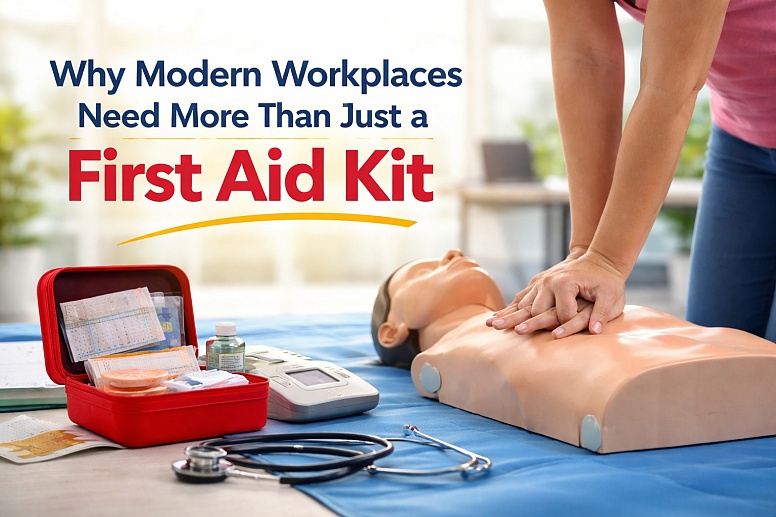
Why Modern Workplaces Need More Than Just a First Aid Kit
To keep employees safe and comply with WSIB/OHS regulations, modern businesses must prioritize hands-on training over simple gear. Obtaining a CPR/AED certification ensures your team can respond to cardiac emergencies within those first critical minutes, significantly increasing survival rates compared to waiting for emergency services to arrive.
What is the Real Value of CPR Training?
Imagine a typical Tuesday morning. You’re grabbing coffee when a colleague collapses. Suddenly, that dusty plastic box on the wall labeled "First Aid" feels pretty useless if nobody knows how to use what's inside. That’s where real training steps in.
It’s not just about ticking a box for HR or making sure you don't get fined. It’s about the confidence to act. When you go through a CPR/AED certification course, you aren't just memorizing steps. You're building muscle memory. You're learning that an Automated External Defibrillator (AED) isn't a scary piece of sci-fi tech; it’s a literal lifesaver that talks you through the process.
How Does Blended Learning Work?
I get it, you’re busy. The idea of sitting in a windowless classroom for two straight days sounds like a drag. That’s why the "Blended" model has become so popular across Canada.
You handle the "brain work" online at your own pace. Watch the videos and take the quizzes while you're on the couch. Then, you just pop into a facility for a few hours to practice the chest compressions and bandage work on the mannequins. It’s efficient, and honestly, way more engaging than the old-school way.
Why is an AED So Important?
Ever wonder why AEDs (Automated External Defibrillators) are everywhere now? From airports to community centers, they are the gold standard for treating sudden cardiac arrest. But having one nearby is only half the battle.
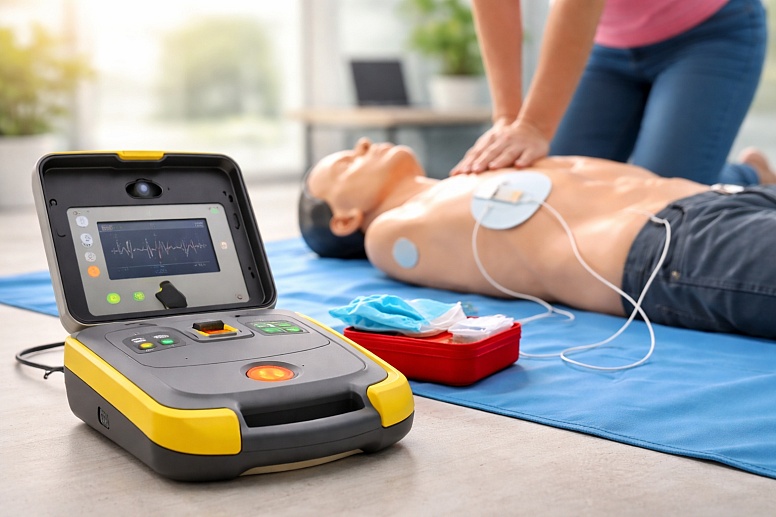
If you don't know how to turn it on or where the pads go, those seconds slip away. Training demystifies the machine. Most people are surprised to find out the machine won't even deliver a shock unless the person actually needs it. It’s built-in safety, but you need the practice to trust it.
Is Your Business WSIB Compliant?
In Ontario and across the rest of the provinces, OHS (Occupational Health and Safety) and WSIB (Workplace Safety and Insurance Board) have specific requirements. Depending on how many people you employ, you might need a certain number of staff members trained in Standard First Aid or just basic CPR.
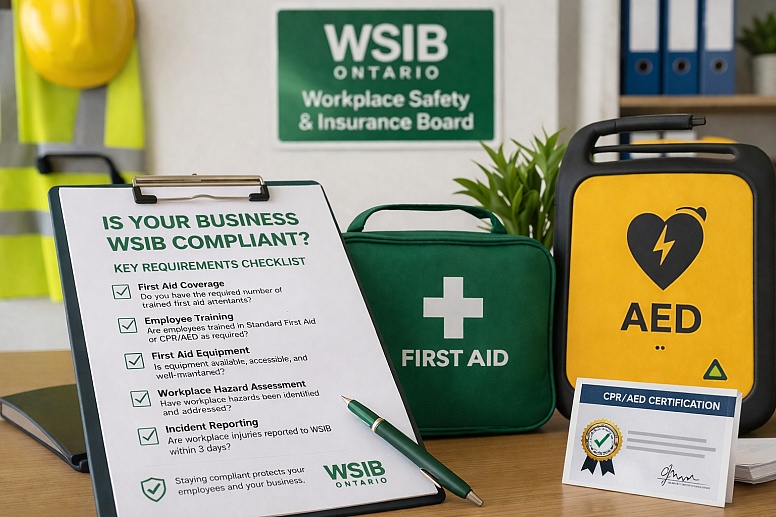
It’s a smart move to check your local requirements. Not only does it protect your staff, but it also creates a culture where people feel cared for. When an employer invests in life-saving skills, it says a lot about the company’s values.
If you are looking for first aid training near the Annex, Koreatown, or other areas close to our facility near the Christie Pits Park area, then you may reach out to Coast2Coast First Aid/CPR - Toronto in that area.
For more info and articles like this, visit our official site.
In modern web design and development, even something as practical as workplace safety content plays a role in user experience and brand credibility. Integrating visuals like first aid kits, AED devices, and compliance checklists into a clean, responsive layout helps communicate trust and professionalism without overwhelming the user.
A well-placed, uncluttered image, paired with concise, accessible content, keeps readers engaged while reinforcing the importance of preparedness. It’s a reminder that great design isn’t just about aesthetics; it’s about delivering meaningful information in an intuitive, visually balanced, and real-world-aligned way.
FAQs
- How long does a CPR/AED certificate last? Most Canadian Red Cross certificates are valid for three years. However, many healthcare professionals choose to recertify every year to keep their skills sharp.
- Can I fail a CPR course? The instructor's goal is to ensure you’re competent. If you show up, participate in the skills session, and pass the multiple-choice test, you’ll be just fine!
- Do I have to do mouth-to-mouth? While "Compression-Only" CPR is better than doing nothing, full certification still teaches rescue breaths. We use specialized pocket masks to keep things hygienic and safe.
- What is the difference between Level C and BLS? Level C covers adults, children, and infants, perfect for the general public. BLS (Basic Life Support) is a faster-paced course designed for healthcare providers like nurses and paramedics.
- How old do you have to be to take the course? There isn't a strict age limit, but students should be physically strong enough to perform chest compressions and old enough to understand the material. Usually, 12 and up is the sweet spot.







0.0307