



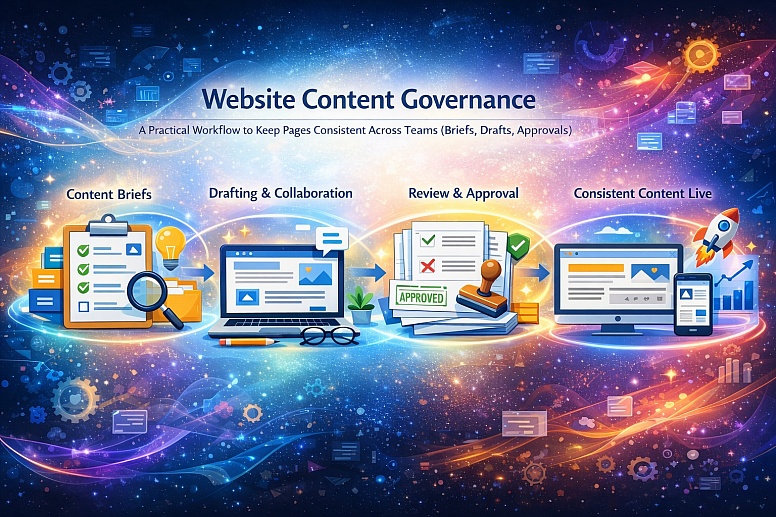
Website Content Governance
A Practical Workflow to Keep Pages Consistent Across Teams (Briefs, Drafts, Approvals)
When you start a website, it’s not dense. Just a handful of pages, a few people writing for them, and a basic design. Once growth starts, things escalate quickly. The marketing team launches more and more campaigns.
Product teams are constantly updating the page for new products. And, suddenly, there are more pages than you can handle. With hundreds or thousands of pages existing across different sections of the website, coherence amongst them can become completely lost.
If you don't have a clear system, there is space for inconsistency. Information can be outdated, and messages can lose impact. This is horrible for branding in particular, as the message needs to stay consistent. This is where website content governance comes in.
By structuring how briefs, drafts, reviews, and approvals happen, companies can scale content while staying consistent and coherent across the pages.
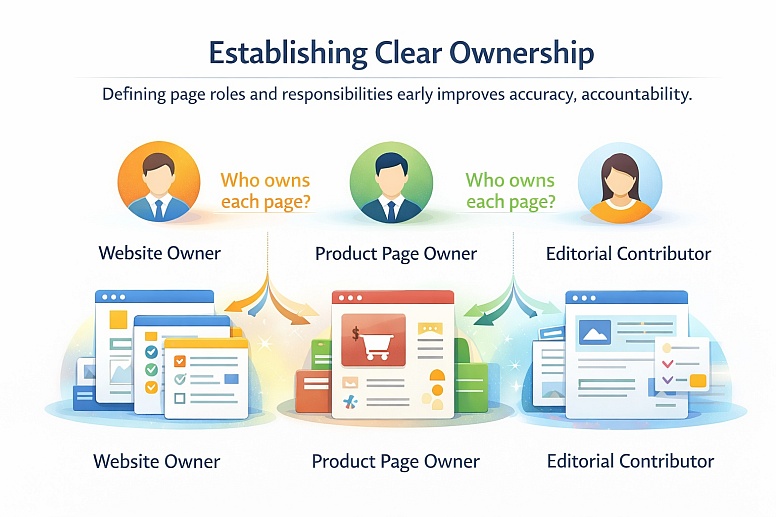
Establishing Clear Ownership
Content governance begins with one deceptively simple question. Who owns each page?
When ownership is unclear, delays multiply. Writers hesitate because they are unsure who should review their work. Editors end up revising material that technically belongs to another department. Meanwhile, outdated information remains live because nobody realizes they are responsible for updating it.
Effective governance solves this by defining roles early. A website owner typically oversees the overall direction of the site and ensures consistency across sections. Individual content owners manage specific areas, such as product pages, blog posts, or support documentation. Each owner becomes responsible for accuracy, tone, and updates within their domain.
Editorial contributors play a different role. Writers, designers, and SEO specialists focus on producing the content itself. Meanwhile, reviewers provide quality checks that ensure information aligns with legal guidelines, brand voice, and accessibility standards.
This clarity removes confusion from the beginning. When a new page request arrives, everyone already knows who will brief it, draft it, review it, and approve it. Instead of negotiating responsibility each time, teams simply follow the workflow.
Over time, this ownership structure becomes the backbone of consistent publishing. Pages remain updated, teams collaborate more smoothly, and accountability stays visible rather than hidden.
Creating Structured Content Briefs
A strong workflow begins long before writing starts. It begins with the brief.
Content briefs act as the blueprint for every page. They define the goal of the content, the audience it serves, and the key information the page must deliver. Without them, writers often interpret requirements differently, leading to inconsistent messaging across the website.
Good briefs typically outline the purpose of the page, target keywords, structural expectations, and brand voice considerations. They also clarify which stakeholders must review the draft before publication. This small step prevents confusion later in the process.
Briefs also help teams maintain consistency when multiple writers contribute to the same site. When every writer receives the same type of guidance, the resulting pages naturally follow a similar structure and tone.
Quality checks can even begin during this stage. Some organizations incorporate review tools during drafting to verify originality and quality standards. For example, teams sometimes use an AI detector during early draft evaluation to ensure the writing reflects authentic human editing rather than unreviewed automated output.
Beyond quality control, briefs also create alignment between departments. Marketing understands how messaging fits into campaigns. Product teams confirm that descriptions reflect current features. Legal teams flag any claims that require careful wording.
The result is a smoother drafting stage. Writers spend less time guessing and more time refining content that already follows a shared direction.
Managing Draft With Consistent Editorial Standards
Once the brief is approved, drafting begins. At this stage, consistency depends heavily on clear editorial standards.
Editorial standards define how content should look, sound, and function across the website. They typically cover tone, formatting rules, paragraph structure, and terminology. They may also define how headings should appear, how images should be used, and how links should be structured.
Without these guidelines, even skilled writers create pages that feel disconnected from one another. One section may sound formal while another feels conversational. Formatting may shift unpredictably from page to page.
Governance eliminates that inconsistency by establishing a shared style guide. Writers can reference it whenever they begin drafting a new page. Over time, these guidelines become second nature.
Structure matters as much as tone. Many organizations define templates for specific content types. Product pages may follow one structure, blog posts another, and landing pages yet another. Templates simplify the drafting process while ensuring users encounter familiar layouts throughout the site.
Draft creation also benefits from collaborative tools. Content management systems often allow multiple contributors to work within the same environment, leaving comments and suggestions directly inside the document. This prevents version confusion that often happens when drafts circulate through email attachments.
By the time a draft reaches the review stage, it already reflects consistent formatting, messaging, and structure. Reviewers can then focus on refining the content rather than fixing avoidable formatting differences.
Building Multi-Layer Review And Approval Workflows
Publishing content without proper review introduces risk. Errors slip through, outdated claims appear online, and compliance issues sometimes emerge long after publication.
A structured approval workflow prevents these problems. Instead of relying on informal approvals, governance creates a predictable sequence of reviews.
The first review usually focuses on editorial quality. Editors refine clarity, improve flow, and ensure the writing aligns with brand voice. This stage is where messaging becomes sharper and easier for readers to understand.
Next comes subject matter review. Product experts or department owners verify the accuracy of technical details, features, and descriptions. Their involvement ensures the content reflects real product capabilities rather than marketing assumptions.
Legal or compliance review may follow for pages that include sensitive claims, pricing information, or policy statements. Privacy teams may also review pages that collect user data.
Finally, a publishing authority gives the final approval. This role ensures that all required reviews have occurred before the page goes live.
While this process might sound complex, a well-designed workflow keeps it efficient. Automated notifications alert reviewers when their approval is required. Clear deadlines prevent bottlenecks. Documentation tracks every revision, so teams understand what changed and why.
This review structure will eventually become a routine. Instead of slowing down content production, it actually speeds things up because everyone knows exactly where a page stands in the process.
Using Tools And Platforms To Support Governance
Technology plays an important role in making governance practical rather than theoretical.
Content management systems serve as the central hub for publishing workflows. They allow organizations to assign permissions based on roles. Some users can draft pages, others can edit them, and only designated owners can publish them live.
These permission levels prevent accidental changes while maintaining accountability. If something breaks or becomes outdated, teams can trace exactly when and where the change occurred.
Project management tools also support governance by tracking tasks across teams. Content requests can be logged, assigned to writers, and moved through review stages in a transparent system. This visibility helps teams manage large publishing volumes without losing track of individual pages.
Digital asset management platforms further strengthen consistency. Images, graphics, and documents are stored in a single approved library rather than scattered across personal folders. Designers and writers can quickly find brand-approved visuals without creating duplicates.
Analytics tools complete the picture by measuring performance. Page engagement, search traffic, and conversion metrics reveal whether published content actually serves its purpose.
Together, these tools create an ecosystem that supports governance automatically. Instead of relying solely on policy documents, the workflow becomes embedded in the systems teams use every day.
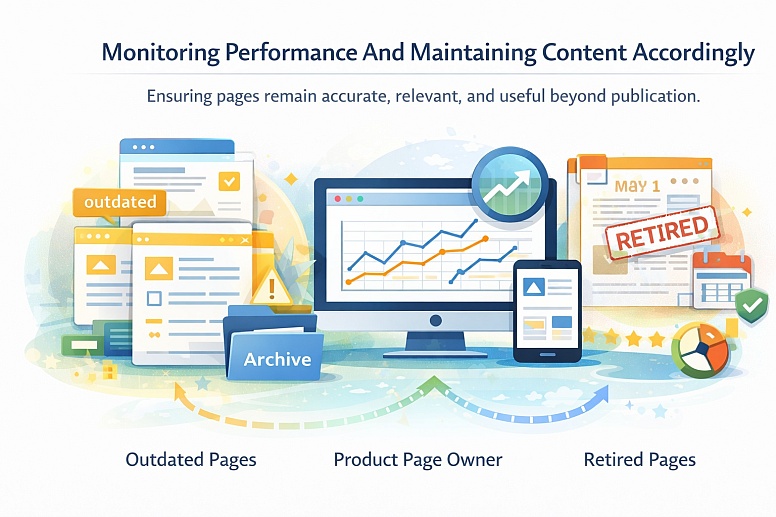
Monitoring Performance And Maintaining Content Accordingly
Publishing a page is only the midpoint of its lifecycle.
Content governance continues long after publication by ensuring pages remain accurate, relevant, and useful. Without this stage, even well-reviewed content eventually becomes outdated.
Organizations typically establish review schedules for different content types. Product pages may require updates whenever features change. Blog articles might receive periodic updates to maintain search visibility. Policy pages must stay aligned with regulatory requirements.
Performance data often guides these updates. Pages with declining engagement may need refreshed messaging or improved structure. Others may be consolidated with similar content to reduce duplication across the site.
Archiving rules also play a role. Not every page deserves permanent space on the website. Old promotions, outdated resources, or irrelevant announcements should eventually be retired. Governance policies define who decides when this happens and how archived pages are handled.
This ongoing maintenance protects the integrity of the site. Visitors encounter current information rather than outdated details buried deep in search results.
Equally important, performance monitoring creates feedback loops for improving governance itself. If certain workflows repeatedly cause delays or errors, teams can refine the process. Governance evolves as the organization grows.
Training Teams And Scaling Governance Across Departments
Even the best governance framework fails if teams do not understand how to use it.
Training plays a crucial role in turning policies into everyday practice. When new workflows launch, teams need clear explanations of how requests move through the system, who approves content, and where documentation lives.
Short reference guides often help employees navigate these processes. Instead of reading lengthy manuals, contributors can quickly check which steps apply to their role.
Training should also extend to new hires. As organizations grow, fresh team members join content operations regularly. Including governance guidelines in onboarding prevents confusion and ensures consistency from the start.
Piloting workflows before company-wide rollout can also reveal hidden issues. A small team may test the process with a limited set of pages, identifying bottlenecks or unclear responsibilities. Adjustments made during this stage prevent larger problems when the system expands.
Scaling governance across departments requires patience and communication. Marketing teams, product teams, and support departments often approach content differently. Governance does not eliminate these differences, but it provides a shared structure that keeps them aligned.
When executed well, governance feels less like a restriction and more like a support system. Teams know exactly how to move ideas from concept to publication without unnecessary confusion.
As websites grow, content operations become increasingly complex. Multiple teams contribute information, updates happen constantly, and the number of pages can expand far beyond what informal processes can manage.
Website content governance provides the structure that keeps everything aligned. By defining ownership, establishing clear briefs, standardizing drafting practices, and building structured approval workflows, organizations create a reliable path from idea to publication. Technology, training, and performance monitoring reinforce this structure over time.
When governance works well, teams spend less energy solving process problems and more energy improving the content itself. Pages remain accurate, messaging stays consistent, and users encounter a coherent experience no matter where they land on the site. In a digital landscape where trust and clarity matter more than ever, that consistency becomes one of the most valuable assets a website can have.







0.2294