



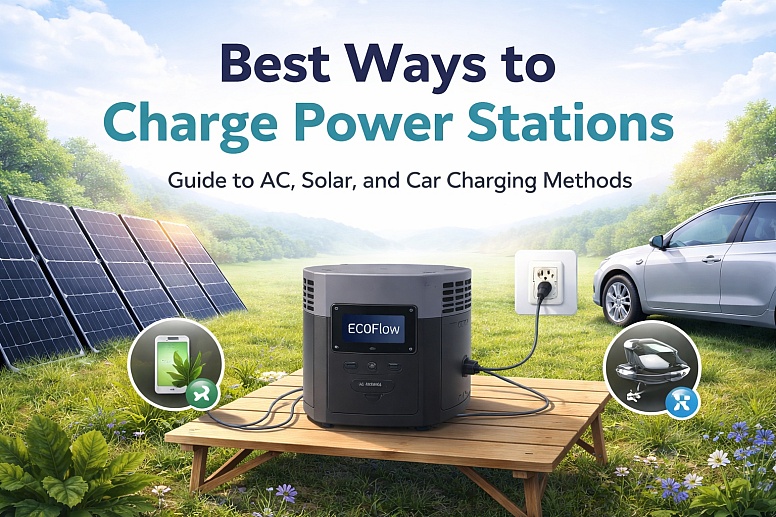
What Are the Best Ways to Charge Power Stations?
Charging a portable power station efficiently and safely is essential if you want dependable performance when it matters most. Much like choosing the right workflow for speed, reliability, and flexibility in development, choosing the right charging method depends on your environment, priorities, and access to power.
Among the most practical options, AC wall charging, solar charging, and car charging stand out as the core methods worth understanding. Power stations like the EcoFlow DELTA 3 are built for this kind of versatility, featuring X-Stream technology that enables a full charge in less than an hour using AC power. Solar charging offers a strong off-grid option in just over two hours, while car charging adds convenience during travel, often completing a charge in a similar time frame.
Understanding how each method works helps you build a more reliable setup, whether you’re planning for backup power, remote work, or life on the move.
Why Charging Strategy Matters
For developers, designers, and remote-first professionals, power is part of the workflow. Just as you’d optimise hosting, performance, and deployment pipelines for stability, it makes sense to think about charging strategy as part of a larger system. The goal isn’t just to recharge quickly; it’s to do so in a way that fits your environment and keeps your gear ready without unnecessary downtime.
That’s where portable power stations become especially useful. They’re not only backup devices for outages or outdoor use; they can also support flexible work setups, mobile workstations, and off-grid productivity. Choosing the right charging method gives you better control over uptime, efficiency, and readiness.
AC Wall Charging: The Fastest and Most Reliable Method
Plugging your power station into a standard AC outlet is the quickest way to recharge. Devices like the EcoFlow DELTA 3 are designed to make the most of this method, reaching a full charge in just 56 minutes.
How AC Charging Works Step by Step
To charge a power station using AC power, begin by connecting the power cable to the station’s input port. Then plug the other end into a standard AC wall outlet. Once connected, the device automatically detects the incoming power and begins charging. Internally, the unit converts AC power into DC power that can be stored by the battery. From there, you can monitor progress using the onboard charge indicator until the battery is full. When charging is complete, unplug the device and store the cable safely for future use.
This method is straightforward, fast, and dependable, which makes it especially useful when you want your power station ready with minimal setup. In the same way that a stable wired connection is often preferred over less predictable alternatives, AC charging remains the most consistent option for routine top-ups and fast turnaround.
When to Use Wall Charging for Best Results
AC wall charging is the best option when speed and reliability are the priority. If you’re preparing for a camping trip, setting up for a remote work session, or getting ready for a possible outage, it’s the fastest route to a full battery. It’s also the most practical choice for people in urban or indoor environments where wall access is always available.
In less ideal weather, wall charging becomes even more useful, especially when solar conditions are inconsistent. It’s also a smart default when you want to avoid using your vehicle for charging. For new power stations, an initial full charge via AC is often recommended to help activate the battery system properly. Over time, regular AC charging also supports healthy full-cycle use, which can contribute to longer battery life and more predictable performance.
Solar Charging: The Best Off-Grid Solution
Solar charging is one of the most appealing options for anyone working or travelling beyond the reach of standard outlets. By converting sunlight into usable energy, your portable power station can stay charged far from fixed infrastructure.
For web professionals, remote workers, and digital nomads, that flexibility matters. A solar-powered charging setup can support longer sessions outdoors or in mobile environments, making it easier to stay connected without relying entirely on conventional power sources.
How to Set Up Solar Panels for Charging
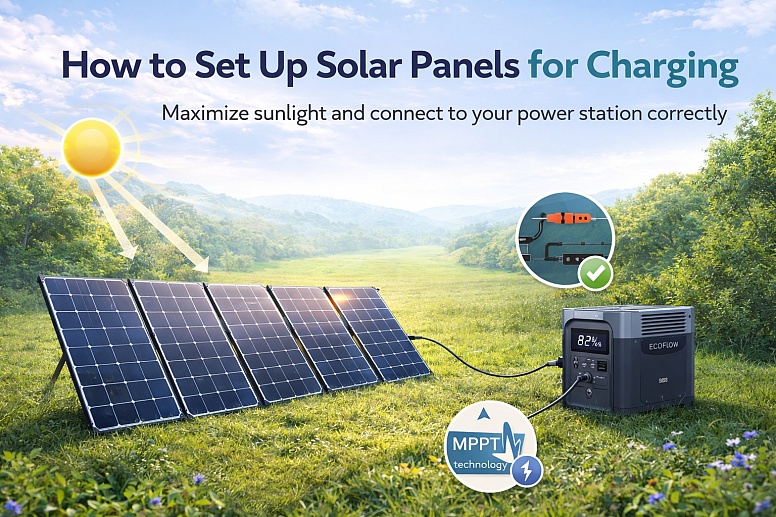
Start by selecting a location with strong, direct sunlight and as little shade as possible. Once you’ve found a clear area, connect the solar panels to the power station using the compatible solar input cable. Position the panels so they face the sun directly to maximise efficiency. Power stations like the EcoFlow DELTA 3 use MPPT technology to optimise solar input, helping the system pull in as much usable energy as possible under changing conditions.
Once connected, the power station will detect the incoming solar power and begin charging automatically. Since solar performance varies throughout the day, it helps to monitor panel position and adjust the angle when needed. Under favourable conditions, charging can be completed in around 130 minutes. When the cycle is complete, disconnect the panels and store them carefully to keep the equipment in good condition.
Pros and Limitations of Solar Charging
The biggest advantage of solar charging is that it gives you access to renewable, off-grid power. It reduces reliance on the electrical grid, lowers energy costs over time, and supports a more sustainable setup. In the right environment, it can be one of the most flexible and efficient charging options available.
At the same time, solar charging comes with variables. Charging speed depends heavily on weather, location, sunlight quality, and panel efficiency. There’s also a higher upfront investment if you’re purchasing quality panels and accessories. Because panels need to be transported, positioned, and stored properly, this method requires a bit more planning than plugging into a wall outlet. Still, when managed well, solar charging offers a dependable and eco-conscious solution for longer off-grid use.
Car Charging: Convenient Power on the Go
Car charging is one of the most useful methods when you’re travelling, commuting, or navigating situations where standard wall access is limited. Pulling power from your vehicle’s output, it gives you a way to recharge while in transit and keep your setup moving with you.
For mobile professionals, road trips, or emergency use, this method adds a practical layer of convenience. It turns travel time into charge time, which is especially helpful when your work or devices need to stay available between stops.
How to Charge Using a Vehicle Safely
To begin, turn on your vehicle and keep the engine running while charging. This helps avoid draining the car battery unnecessarily. Next, locate your power station’s car charging cable and connect one end to the unit’s input port. Plug the other end into the car’s cigarette lighter socket or 12V output port. Once the connection is made, the station will detect the input and begin charging.
Keep an eye on the charging indicator to monitor progress. It’s important not to leave the vehicle off during extended charging sessions, as this can deplete the battery and create problems later. Once charging is complete, disconnect the cable from both ends carefully and store it for future use. Safe use of car charging depends on consistency and awareness, especially when you’re relying on your vehicle as part of your power setup.
When Car Charging Makes the Most Sense
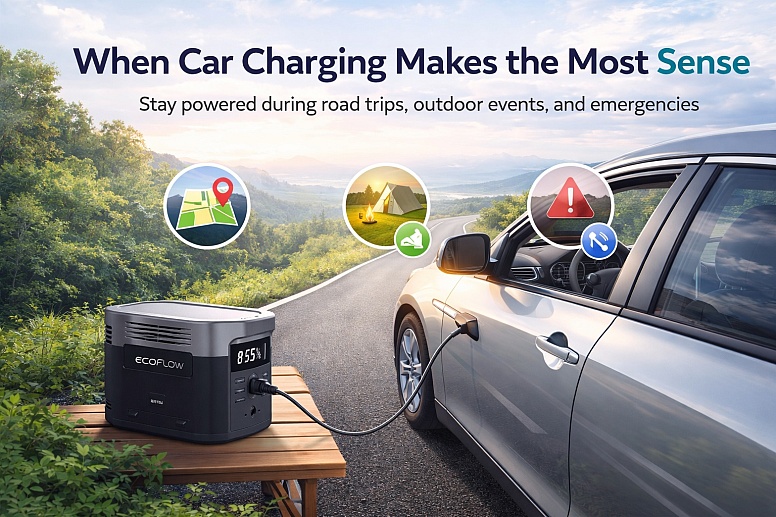
Car charging is ideal when you’re already on the road and want to keep your power station topped up without pausing to find a wall outlet. It’s especially useful during road trips, outdoor events, long commutes, and emergency scenarios where solar conditions are poor or unavailable.
It also works well for users with RVs, vans, or mobile workstations who want one more layer of charging flexibility. In many cases, it’s less about charging from empty and more about maintaining readiness while moving between locations. As long as your vehicle has sufficient fuel or battery support, car charging can be an efficient part of a broader charging strategy.
Generator and Alternative Charging Methods
When standard charging methods aren’t available, generators and emerging alternatives can fill the gap. These options may not always be the first choice, but they add resilience to your setup by giving you additional ways to stay powered in less predictable conditions.
For anyone building a dependable backup workflow, these alternative methods function a bit like fallback systems in development: not always the primary route, but incredibly valuable when the main path is unavailable.
Charging with a Gas Generator or Backup Source
Gas generators remain a dependable option when wall power, sunlight, or vehicle access isn’t available. To use one safely, place the generator at an appropriate distance from your working or living area to reduce exposure to exhaust fumes and noise. Then connect the power station using the correct charging cable and start the generator. Once it reaches a stable operating speed, the power station will begin pulling energy from it.
As charging continues, monitor both the power station’s progress and the generator’s fuel level. This method is especially valuable in remote locations or during extended outages where reliability matters more than convenience. While generators are effective, they do require fuel planning, safe placement, and ventilation awareness. If possible, choosing a more efficient or lower-emission model can reduce the environmental impact while preserving the reliability of this backup option.
Emerging Options Like EV Charging Stations
As charging infrastructure evolves, electric vehicle stations are becoming an increasingly interesting option for power station users. In some cases, these high-output charging points can be used to charge compatible portable power stations with the right adapter and connection setup.
This approach is especially useful when travelling through areas with strong EV infrastructure. Because these stations are designed for high-capacity charging, they can significantly reduce downtime and support faster energy recovery for larger batteries. As technology continues to improve, compatibility and ease of access are likely to get better, making EV charging an increasingly viable part of modern portable power workflows.
Choosing the best way to charge a portable power station depends on where you are, how you work, and what kind of reliability you need. AC wall charging remains the fastest and most dependable option for day-to-day use. Solar charging is ideal for off-grid flexibility and sustainability. Car charging adds convenience for travel and mobile setups, while generators and EV stations provide valuable alternatives when conventional methods fall short.
Each charging method has different strengths and limitations, which makes versatility one of the most important features in a modern power station. By understanding how these options fit different environments and workflows, devices like the EcoFlow DELTA 3 can remain ready, efficient, and adaptable, whether you’re preparing for backup power, building a remote setup, or simply making sure your gear stays charged wherever work takes you.







0.1784