



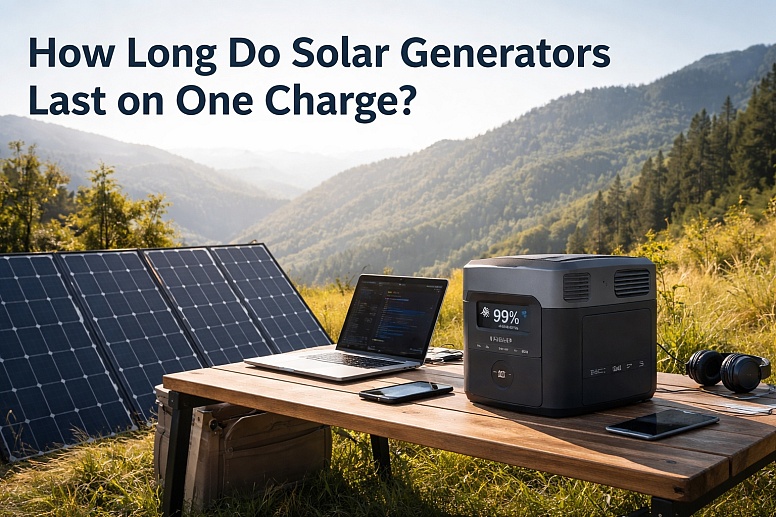
How Long Do Solar Generators Last on One Charge?
Solar generators offer a sustainable power solution, but understanding their runtime capabilities can be complex. Knowing how long a solar generator lasts on a single charge boosts efficiency and reliability. Factors such as battery capacity, power consumption, and solar input play significant roles in determining this duration.
For example, the EcoFlow DELTA 3 Solar Generator provides impressive performance, featuring 1-5kWh expandable storage and a 500W MPPT solar input charging fully in just 130 minutes. When combined with AC power, it charges in a mere 56 minutes.
This guide will illuminate these variables, helping you appreciate how they impact your solar generator’s run time.
What Affects Solar Generator Runtime?
Several factors dictate the duration for which a solar generator can run on one charge.
Battery Capacity and Stored Energy
Battery capacity, measured in watt-hours (Wh), is key to determining runtime. Higher-capacity batteries store more energy, which translates into longer usage durations. For instance, EcoFlow DELTA 3 Solar Generator’s expandable 1-5kWh provides substantial storage, ideal for extended use.
This feature allows users to power household devices for longer periods without needing frequent recharges. However, capacity alone doesn’t determine runtime; energy conversion and efficiency rates affect how stored power translates into usable electricity. Thus, a robust battery capacity combined with efficient energy utilization extends a solar generator’s performance and reliability.
Power Consumption and Connected Devices
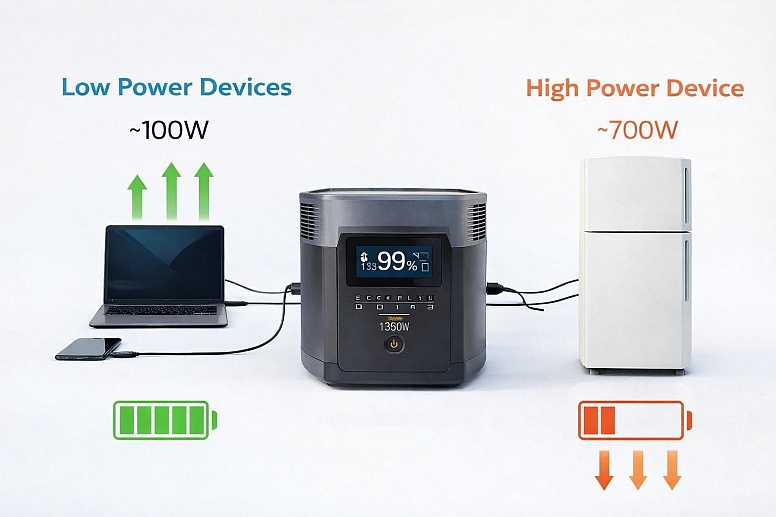
The power consumption of connected devices directly influences a solar generator’s runtime. Devices with higher watt requirements deplete stored energy faster, shortening usage periods. For instance, running a refrigerator consumes more energy than charging smartphones, resulting in varied runtimes. Users should evaluate their energy needs by calculating the total wattage of all connected devices.
Implementing energy-efficient appliances reduces overall consumption, thereby extending the generator’s operational time. Balancing the number and type of devices connected is crucial for optimizing solar generator performance, ensuring sufficient power for essential items without premature depletion.
Solar Input and Recharging Conditions
Solar input, determined by the efficiency and capacity of solar panels, affects generator recharging rates and subsequent runtime. The EcoFlow DELTA 3’s 500W MPPT solar input is remarkable for rapid energy retrieval; full solar charge in 130 minutes. Optimal solar panel placement and weather conditions amplify input, maintaining consistent power levels. Properly designed solar panel installations maximize sunlight capture, significantly reducing recharge times for portable stations.'
These conditions also impact recharging intervals; favorable sunlight shortens downtime between uses. For larger solar systems, AI solar monitoring software can help track solar production, weather-related performance changes, and charging efficiency, giving users better visibility into how effectively their solar setup is generating and storing energy.
Recharging strategies, such as combining AC power with solar input, enhance versatility by reducing dependency solely on sunlight, offering continuous power availability.
How to Calculate Solar Generator Runtime Accurately?
Accurate runtime estimation requires understanding solar generator specifications and operating conditions.
Simple Runtime Formula (Watt-Hours ÷ Load)
A straightforward way is to use the formula: Watt-Hours ÷ Load (in watts). To apply this, gather the generator’s total capacity; say, EcoFlow DELTA 3’s 5000Wh, and divide by the combined wattage of connected devices.
If your setup utilizes devices consuming 1000 watts, the calculation yields a 5-hour runtime. This formula provides a baseline expectation, assisting in planning device usage and monitoring energy needs efficiently. However, real-world factors like energy conversion losses and battery efficiency could slightly alter these results.
Real-World Efficiency Loss and Adjustments
Real-world applications experience efficiency loss due to inverter power conversion and environmental factors. Typically, solar generators operate at 85-90% of their stated capacity. Therefore, adjustments to the runtime formula account for this, offering more precise estimates. For instance, if EcoFlow DELTA 3 functions at 90% efficiency with a potential runtime of 5 hours, actual performance would be closer to 4.5 hours.
Users must incorporate these adjustments, optimizing power storage strategies to consider conversion losses and avoid unexpected power shortages in crucial situations.
Real Usage Scenarios and How to Extend Runtime
Exploring common device runtimes can enhance understanding and optimization techniques.
Runtime Examples for Common Household Devices
A 150Wh laptop connected to EcoFlow DELTA 3 with 5000Wh capacity offers an impressive 33-hour runtime. In contrast, a 700Wh refrigerator would limit this to roughly 7 hours, demonstrating high consumption. Lighting setups utilizing LED bulbs, with a mere 10Wh each, extend usage into days due to minimal power draw.
Such examples help users allocate resources based on necessity, ensuring efficient energy use and prioritizing battery longevity during daily operations.
Practical Tips to Make Your Generator Last Longer
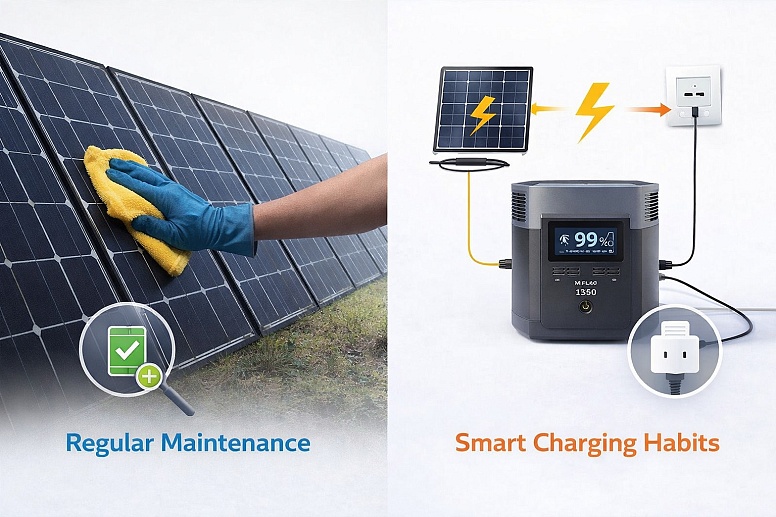
Extending generator runtime involves implementing several practical strategies. Employ energy-efficient devices to minimize drain, ensuring consistent power availability. Regular maintenance, including battery and solar panel checks, optimizes functionality and prevents efficiency loss.
Smart usage habits, like disconnecting idle devices and regulating power draw, preserve stored energy. Additionally, harnessing auxiliary recharging means, such as combining solar with AC input, ensures continuous readiness. These measures not only enhance performance but also extend device life, providing reliable energy solutions for all needs.
Conclusion
Understanding solar generator runtime involves evaluating multiple factors such as capacity, consumption, and recharge capabilities. The EcoFlow DELTA 3 Solar Generator exemplifies efficient energy management with its robust features. To maximize runtime, users should analyze their power needs, consider efficiency losses, and adapt usage behaviors accordingly.
Just like in web design and development, where performance depends on how efficiently assets, scripts, and hosting resources are managed, the runtime of a solar generator hinges on how well energy is stored, distributed, and replenished. Factors such as battery capacity, power load, and input efficiency function much like bandwidth, user demand, and server optimization in a digital environment.
For instance, a high-capacity solution like the EcoFlow DELTA 3, with its expandable storage and rapid charging capabilities, mirrors scalable infrastructure that adapts to varying demands. By understanding these variables and optimizing usage, whether it’s minimizing energy drain or leveraging faster recharge methods, you can ensure consistent performance, much like maintaining a fast, responsive, and reliable website.
By employing these principles, individuals can optimize their solar generator’s lifespan, ensuring constant power availability for diverse applications. Thoughtful planning and maintenance are key to achieving a sustainable energy solution and a reliable power source.







0.2669