



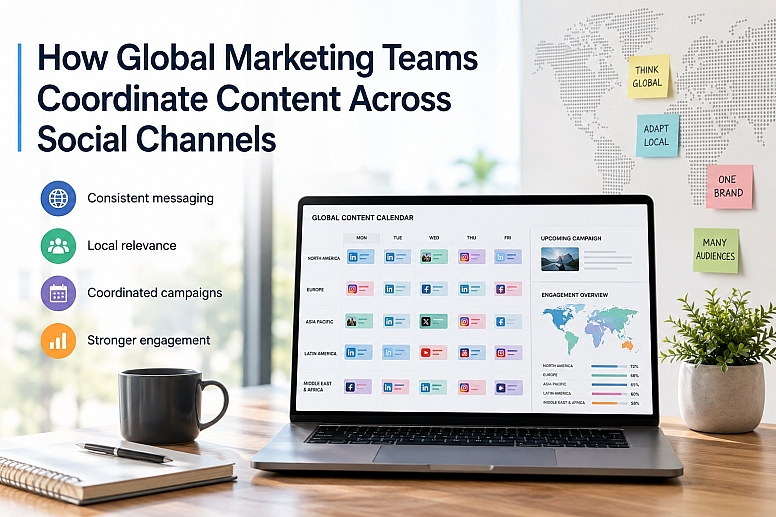
How Global Marketing Teams Coordinate Social Content
Global content marketing is the practice of using content to promote a company and its offerings to audiences around the world. It goes well beyond simple translation; it requires aligning messaging, preserving a consistent brand voice, and tailoring content so it connects with different cultures and regions.
From an operational standpoint, global content marketing includes creating, managing, localizing, and distributing content in formats like blog posts, white papers, videos, and social media updates. Strategically, the goal is to deliver a unified brand message that still feels relevant at a local level. The main challenge is striking the right balance between global consistency and local adaptability, something that effective social media management plays a critical role in achieving.
Why coordinating global social content matters
When content is well-coordinated across social platforms, brands can:
- Maintain consistent messaging worldwide
- Align campaigns across different regions
- Give local teams flexibility to adjust content
- Deliver more personalized and culturally relevant experiences
Without proper coordination, messaging can become inconsistent, tone may vary, and opportunities to connect with audiences can be lost.
Building a global content marketing strategy
- Understand Your Global Audience
A strong global strategy starts with a clear understanding of your audience. Before producing content, teams need to evaluate who they’re targeting and how those audiences differ by region.
Key questions to consider include:
- Is your content designed with a global audience in mind?
- Who are your customers in different regions?
- Do audience preferences vary by country?
- How well-known is your brand internationally?
- Where are your potential customers located?
- What languages do they speak?
- Are there cultural sensitivities to consider?
Answering these helps ensure content is both relevant and respectful across markets.
- Choose the Right Social Platforms
Not every platform performs the same everywhere. What works in one country might fall flat in another.
For example:
- LinkedIn is widely used globally, but Germany often favors XING
- Some regions rely more on messaging apps than traditional social platforms
- Certain markets prefer video, while others engage more with text
Understanding where your audience spends time allows you to focus efforts where they’ll have the most impact.
- Distribute Content Strategically
Social media is important, but it shouldn’t stand alone. A strong global distribution plan also includes:
- Regional websites and blogs
- Email campaigns
- Local media outlets
- Influencer and partner collaborations
Market research helps determine how different audiences consume content, making distribution more effective.
- Focus on Localization, Not Just Translation
Localization involves more than converting language; it means adapting:
- Tone and messaging
- Cultural references
- Visual elements
- Buying behaviors
Even though English is widely used, relying on it alone can limit reach. Creating content in local languages, or using multilingual resources, helps brands connect more authentically. Well-localized content feels natural, not imported, which builds trust and engagement.
- Set Global and Local KPIs
Measuring success requires both high-level and region-specific metrics.
Examples include:
- Global: brand awareness, total engagement, overall conversions
- Local: regional traffic, country-level conversions, platform-specific engagement
Performance should always be interpreted in context. For instance, audiences in Asia may prefer quick, direct interactions, while European audiences often take more time to research before converting. Recognizing these patterns helps refine strategy.
How global teams coordinate social content
Centralized Strategy with Local Execution
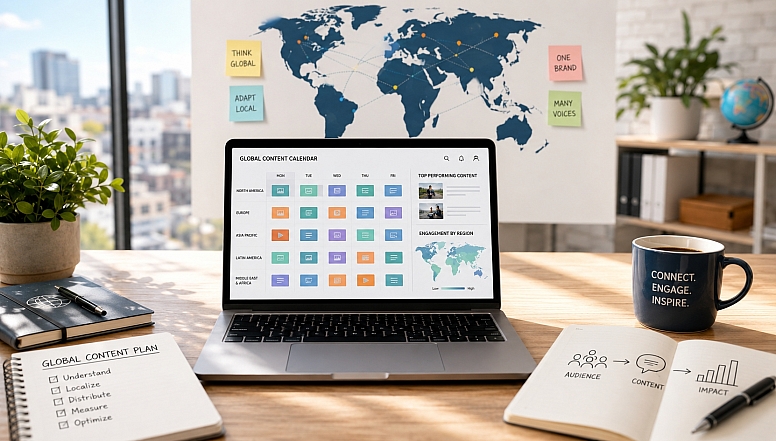
A common approach is to centralize strategy while allowing local teams to execute. Headquarters defines brand guidelines and campaign goals, while regional teams adapt content to fit local preferences. This ensures consistency without sacrificing relevance.
Using Social Media Tools
To manage content at scale, teams rely on publishing tools that help:
- Schedule posts across time zones
- Maintain shared content calendars
- Enable collaboration
- Keep branding consistent
A unified content calendar gives a global view while still allowing local customization.
Cross-Team Collaboration
Effective coordination depends on strong communication between global and regional teams. This includes:
- Regular strategy meetings
- Shared documentation
- Ongoing feedback loops
Clear communication prevents duplication and misalignment.
Content Governance and Guidelines
To maintain consistency, teams establish clear rules around:
- Brand voice and tone
- Visual identity
- Messaging standards
- Compliance requirements
These guidelines ensure all content aligns with the brand, regardless of region.
Using Data and Analytics
Data plays a critical role in optimizing global efforts. Teams use it to:
- Track performance by region
- Identify top-performing content
- Understand audience behavior
- Adjust strategies in real time
Data-driven decisions lead to continuous improvement.
Top global content marketing trends for 2026
Customer-First Content
Modern strategies focus on solving real customer problems rather than just targeting keywords. This builds trust and improves engagement in competitive markets.
Storytelling Over Static Messaging
Brands are moving toward more engaging, story-driven content. This includes:
- Turning case studies into narratives
- Using conversational language
- Tailoring content to specific audiences
- Showcasing brand personality
Authentic storytelling resonates across cultures.
Investing in Video
Video continues to dominate content consumption worldwide. Opportunities include:
- Live streams and Q&A sessions
- Product demos
- Customer testimonials
- Short-form videos and series
Video is highly engaging and easy to repurpose across platforms.
Managing content across global social channels requires both structure and flexibility. It involves careful planning, cultural awareness, and ongoing optimization.
The most effective global marketing teams:
- Think globally but adapt locally
- Balance consistency with flexibility
- Use data to guide decisions
- Focus on authentic, customer-centered content
As digital channels continue to evolve, the ability to coordinate content across regions will remain a key driver of global success.







0.3923