



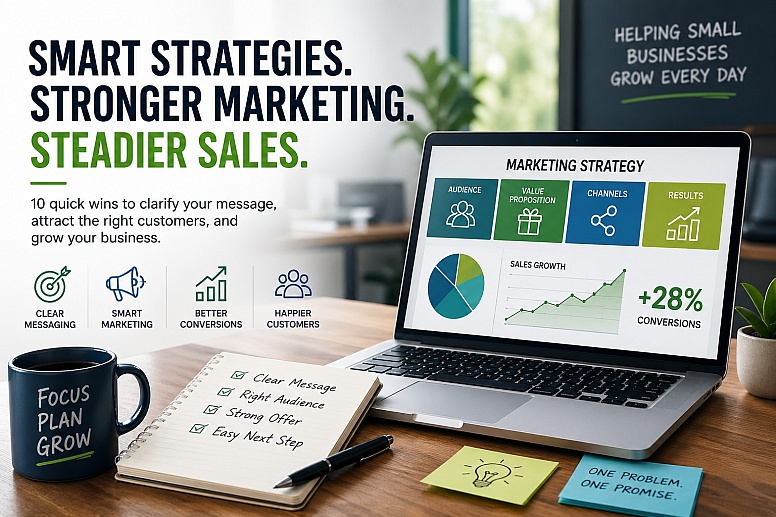
Businesses Can Boost Sales & Marketing with Smart Strategies
Local small business owners, freelance web designers, and ecommerce entrepreneurs often aren’t losing sales because the product is wrong; they’re losing them because the message is unclear. Common sales pitch challenges show up as vague offers, mismatched promises, and conversations that stall right when a buyer needs clarity.
Add marketing strategy obstacles like scattered channels and inconsistent priorities, plus brand storytelling difficulties that make every post and page feel disconnected, and momentum gets expensive fast.
Clearer customer engagement removes business growth hurdles by making the value easy to see and the next step easy to take.
Build On-Brand Visuals Fast With AI-Generated Images
Once you’ve pinpointed what’s causing buyer hesitation, clear visuals can make your message easier to grasp at a glance.
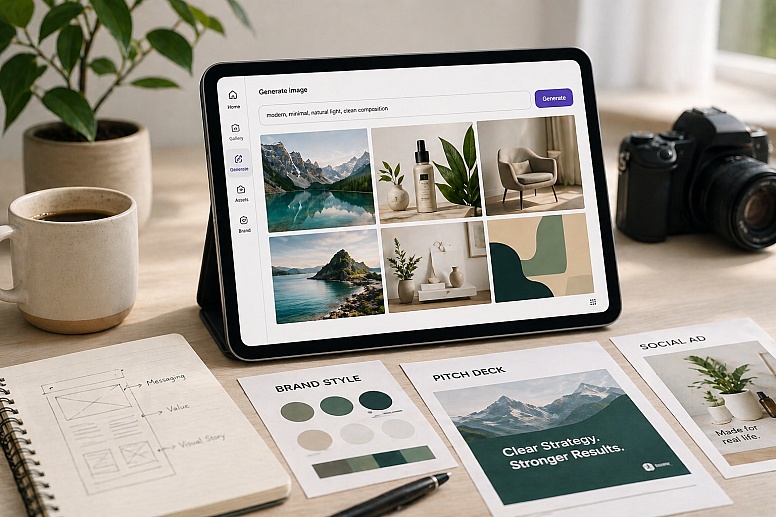
AI-generated images can help you create engaging visual content that supports your story, adds polish to sales pitches, and makes marketing materials simpler to understand, especially when you’re explaining an offer, a process, or a key benefit. Because you can generate artwork in a consistent style, it’s easier to keep your pitch deck slides, ads, and website graphics on-brand and cohesive, even without a big budget.
If you want a quick way to produce specific images without graphic design experience, you can create AI-generated artwork with Adobe Firefly so you can streamline building and refreshing visuals across your sales pitches and marketing assets.
Next, you’ll apply that clarity and consistency through 10 quick wins you can use right away to sharpen your pitches and campaigns.
Use These 10 Quick Wins to Sharpen Pitches and Campaigns
Strong visuals grab attention, but your words still have to convert. Use the quick wins below to turn customer pain points into a clear value proposition, choose smarter marketing channels, and end every message with an easy “yes.”
- Collect pain points in 15 minutes: Open your last 10 customer emails, reviews, or DMs and list the exact phrases people use when they’re frustrated, stuck, or comparing options. Group them into 3 buckets (time, money, risk) and pick the top 1–2 to lead with. Using your customers’ language makes your pitch feel specific rather than salesy.
- Write a one-sentence value proposition: Fill in this template: “For [audience] who struggle with [pain point], I help you [outcome] by [how you do it].” A helpful starting point is answering a few core questions like who you serve, what difficulty you solve, and how you’re different. Put this sentence on your homepage hero, proposals, and the first slide of your pitch deck.
- Add a simple emotional story (Problem → Turning Point → Result): Pick one real customer scenario and tell it in 3 short beats: what was happening, what changed, and what improved. Keep it concrete (deadlines, confusion, wasted spend) and tie it directly to the outcome you promise. Pair it with the on-brand AI-generated image style you created earlier so the story feels cohesive across your deck, site, and ads.
- Segment your audience into 2–3 “starter” groups: Don’t market to “everyone.” Split by one meaningful difference, such as “new store owners vs. scaling ecommerce brands” or “DIY site owners vs. teams needing ongoing support.” If you can, do audience research across segments by running a few quick interviews and checking behavioral patterns (what they click, what they abandon, what they ask). Then tweak your headline and offer per segment.
- Match the channel to the job-to-be-done: Choose one primary channel per segment based on intent: search content for “I need this now,” email for “I’m comparing options,” social for “I’m discovering ideas,” and partnerships for “I trust referrals.” Build one message per channel instead of reposting the same copy everywhere. A fast rule: if you can’t explain what the customer is trying to do on that channel, you’re likely on the wrong one.
- Turn features into proof with a mini “before/after”: Replace “We offer fast checkout” with “Cut checkout steps from 5 to 2 so fewer shoppers drop off.” Add one proof point: a short testimonial, a screenshot of results, or a specific process step (“we start with a 20-minute audit”). This keeps your pitch grounded and supports the visuals you’ve built with simple, believable detail.
- Use one clear call to action (CTA) with a low-friction next step: End every page, ad, and pitch with a single action that matches commitment level: “Get a 3-point site teardown,” “See pricing,” or “Book a 15-minute fit call.” If your CTA feels pushy, lower the commitment, not the clarity.
When your pain point, story, segment, channel, and CTA all line up, your message stops sounding vague and starts sounding helpful.
Strengthen Strategy With Structured Business and Marketing Learning

Building stronger fundamentals can make your next decisions clearer and easier.
Earning a business degree with a marketing focus can strengthen how you communicate and choose what to do next by developing skills in creative communication, digital marketing, consumer behavior, and brand strategy. Online degree programs can make it possible to work full-time while keeping up with coursework.
Check this out for a long-term learning path that fits around a busy schedule. With that foundation in place, it’s much simpler to align your sales pitch, marketing, and brand story around one clear problem and promise.
Understanding the One-Problem, One-Promise Framework
At the heart of smarter sales and marketing is a simple framework: pick one customer problem you solve best, state one clear promise you can keep, and repeat it everywhere. Your website, emails, ads, and sales conversations should all tell the same story, just sized to the channel.
This matters because mixed messages create hesitation, even when your product is good. If you lead with a values-based promise, it can resonate since 82% of consumers say they want more than just quality products and services. Consistency also helps your marketing and sales reinforce each other.
Imagine a local ecommerce shop that solves “gift panic” with fast shipping and easy bundles. The homepage headline, Meta ad, and sales script all promise “thoughtful gifts in minutes,” and every page supports that promise with evidence. A designer can mirror the promise in navigation labels, product filters, and checkout copy.
Once your message is locked, small tests and tracking can show what to tighten and what to drop.
Understanding Fast Marketing Iteration
A consistent message is your starting point; iteration is how you make it sharper. Set up simple conversion tracking, watch a few performance metrics, and collect customer feedback so you can spot what’s working and what’s confusing. Use small A/B tests, like two headlines or two call-to-action buttons, to learn quickly without guessing.
This matters because tiny improvements compound when you run the same campaign for weeks. A realistic between 5-15% conversion range can help you sanity-check results and decide whether to tweak the offer or the page.
For example, an ecommerce site tests “Shop gift bundles” versus “Send a gift in minutes.” The designer keeps the layout the same, tracks the add-to-cart rate, and asks buyers what almost stopped them. After one week, the winning wording becomes the new default.
Lock in the lesson, refine your pitch, and apply one clear change today.
Sales and Marketing Q&A Small Businesses Ask
Q: What should I fix first when my landing page gets traffic but no sales?
A: Start with message clarity above the fold: who it’s for, what it solves, and the next step. Strong visuals cannot rescue confusing copy, and clear messaging leads to better customer decisions, which can lift conversions. Remove extra links and keep one primary action.
Q: How can I sound confident without coming off “salesy”?
A: Lead with the customer’s problem in their own words, then state a specific outcome you deliver. Show one proof point like a short quote, a metric, or a quick process preview. Specific beats hype every time.
Q: Why do people ask questions and then disappear after I send pricing?
A: Most drop-offs are uncertainty about fit, results, or risk, not price alone. Add a simple “what’s included” checklist, a timeline, and a clear success definition. Then offer a low-commitment next step, like an audit or sample.
Q: How do I build trust fast on a new ecommerce site?
A: Put reassurance near the buy button: shipping details, returns, payment security, and real reviews. Make support easy to find with a visible contact option and response window. Keep product pages consistent and scannable.
Q: Can I prove marketing ROI if I’m not great with analytics?
A: Yes, track just three numbers per channel: cost, leads or orders, and revenue. Basic marketing automation can help you see what converts and what wastes spend. Make one change at a time so results stay attributable.
Small changes, measured simply, add up to a message customers trust and act on.
Turn Smart Marketing Into Steadier Sales This Month
Small businesses rarely struggle with effort; the struggle is knowing what to focus on when time and budget are tight. A simple mindset, clear messaging, basic measurement, and strategic implementation through small iterations keep key marketing takeaways from becoming unfinished notes.
When applied, sales pitch improvement becomes easier to repeat, results become easier to read, and business confidence stops depending on luck. Focus, test, and refine. Small wins beat scattered activity.
Choose one message or offer to adjust today, then track one metric for the next two weeks and keep learning from what customers do and say. That habit of ongoing learning builds resilience and steadier growth as conditions change.





0.2128