



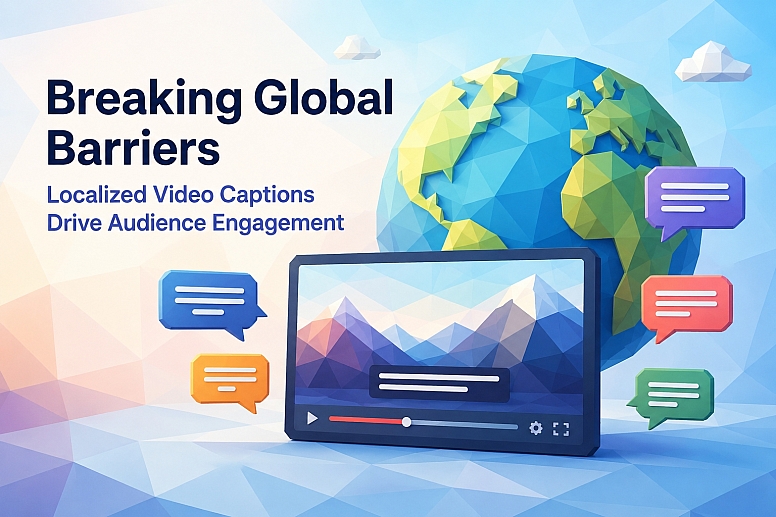
How Localized Video Captions Drive Audience Engagement
Sound-off viewing is no longer a fleeting digital trend. It is the absolute default. Modern audiences frequently scroll through media in crowded trains, quiet offices, or late at night. If a video lacks immediate, readable context, viewers vanish in seconds. Accurate localized text tracks solve this exact problem - instantly boosting viewer retention, driving organic search visibility, and ensuring digital accessibility across diverse multinational markets.
A robust video localization strategy acts as the critical bridge between a brand and its untapped global audience. The moment international viewers instantly grasp the visual context, passive scrolling stops. Active engagement begins.
The Mechanics Behind Multilingual Text Integration
Translating media requires far more than feeding audio into automated software. Literal translations often strip away context, leaving international viewers entirely confused. Expanding organizations frequently utilize specialized subtitling services to capture highly specific cultural nuances without distortion. This exact linguistic precision establishes immediate trust.
It prevents the kind of critical translation errors that can damage a brand's reputation overseas. High-quality localized video captions ensure that complex industry terminology keeps its exact meaning - regardless of the target region. Consider the luxury retail sector. A global brand recently saw a 15 percent conversion bump simply by tailoring linguistic overlays specifically for Middle Eastern purchasing behaviors. The message resonated because it felt native.
Scientific Metrics Driving Viewer Retention
Data paints a crystal-clear picture regarding media consumption habits. Industry studies confirm that videos equipped with precise text tracks experience up to an 85 percent increase in completion rate compared to completely uncaptioned media. Why the massive difference? The human brain processes written words and moving images simultaneously. This dual-channel cognitive mechanism permanently reinforces memory retention.
Linguistics experts consistently note that multilingual text overlays drastically reduce the cognitive load placed on non-native speakers. A European enterprise software firm recently recorded a massive 40 percent engagement spike in Asian markets simply by adding carefully translated text to their technical tutorials. Viewers absorbed complex programming data without relying on audio cues (which often feature unfamiliar accents or pacing). The result? Overall interaction time doubled within just four weeks.
Algorithmic Advantages and Strict Standards
Search engine crawlers process written text brilliantly. They cannot, however, natively watch or listen to video files. Adding localized dialogue creates structured, highly indexable data. This technical advantage allows a single media asset to rank for organic search queries across multiple languages simultaneously. When algorithms index this translated dialogue, new entry points for international traffic open naturally.
Digital accessibility currently stands as a strict legal mandate, not a mere suggestion. Modern regulatory frameworks require accurate text tracks to assist individuals with hearing impairments. To maintain compliance while maximizing engagement, media producers must optimize a few critical parameters:
- Cultural context adaptation (ensuring regional idioms translate logically).
- Reading speed limits (preventing visual fatigue by pacing the characters displayed).
- Technical format compatibility (guaranteeing flawless playback across all mobile devices).
Securing International Market Share
Automated transcription algorithms frequently fail at basic human subtleties. AI software struggles heavily with regional dialects, specialized corporate jargon, and contextual pacing. Consider an international e-learning platform that recently reduced course abandonment by 25 percent across Latin America. The catalyst? Upgrading their Spanish text tracks from automated systems to human-reviewed versions.
Professional linguists adjust the vocabulary and tone to match exact cultural expectations. The current trajectory of global media consumption points directly toward highly accessible, culturally accurate content. Investing in precise cross-cultural media adaptation bridges geographical divides and builds lasting consumer trust.
Media assets built with premium multilingual tracks consistently outperform unoptimized material. Organizations prioritizing this level of detail do not just reach global viewers - they actually resonate with them.







0.3075