



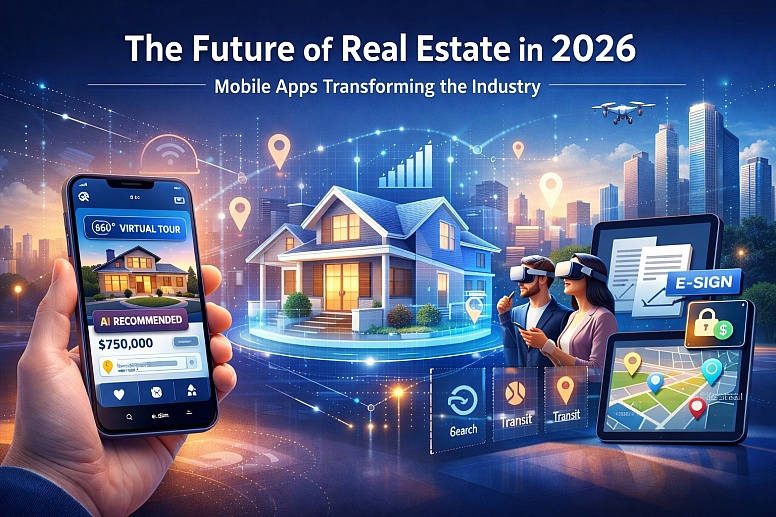
How Mobile App Development Is Transforming Real Estate
2026 is proving to be a transformative year for the real estate sector as digital technology continues to reshape the way properties are bought, sold, rented, and managed. With smartphones now an essential part of everyday life, the property journey has become increasingly mobile-first.
Buyers, sellers, investors, and tenants expect convenience, speed, and transparency directly from their mobile devices rather than relying solely on traditional methods such as office visits, phone calls, or face-to-face meetings.
As a result, mobile apps have become powerful tools for real estate businesses. Mobile app development is transforming the industry, from property discovery and virtual tours to secure payments and client communication. To remain competitive and deliver exceptional user experiences, many businesses are investing in custom mobile app development services.
The Growth of Mobile-First Real Estate Experiences
Many property journeys in 2026 now begin on a smartphone. Buyers want instant access to listings, property photos, pricing information, neighbourhood insights, and location data. Sellers seek greater visibility and faster responses to enquiries, while agents require efficient tools to manage leads, appointments, and communication.
Well-known platforms such as Redfin and Zillow have demonstrated the effectiveness of mobile-first experiences. Inspired by the success of these platforms, real estate businesses of all sizes are partnering with a real estate app development company to build tailored mobile solutions that align with their specific business objectives.
Mobile Aerial Platform for Property Inspections
For properties that require a closer look at exterior structures, rooftops, or elevated areas, professionals may use a mobile aerial platform to safely access difficult-to-reach locations during inspections and maintenance. This equipment can complement mobile apps, virtual tours, and other digital tools by helping property professionals assess areas that are difficult to inspect from ground level.
AI and Machine Learning for a Smarter Property Search
AI-powered property search is one of the most significant developments in real estate apps in 2026. Modern applications analyse user behaviour, including search history, preferred locations, budget ranges, and property preferences, to deliver personalised recommendations.
Rather than scrolling through hundreds of listings, users can quickly discover properties that closely match their requirements. This improves the overall customer experience while helping businesses increase engagement and conversion rates.
With the support of custom mobile app development services, real estate companies can integrate artificial intelligence and machine learning capabilities that continuously improve recommendation accuracy and user satisfaction over time.
Virtual Tours & Augmented Reality Transforming Property Viewing
The property viewing process has evolved significantly. In 2026, virtual tours and augmented reality (AR) features have become valuable additions to many real estate mobile applications. These technologies allow users to:
- Take immersive 360-degree virtual property tours.
- Examine room layouts and dimensions more effectively.
- Visualise furniture placement and interior décor.
- Explore properties remotely from virtually anywhere.
These capabilities are especially beneficial for international investors, busy professionals, and non-resident buyers. By providing immersive digital experiences, real estate apps help reduce unnecessary travel while increasing buyer confidence and engagement.
Quicker and More Transparent Communication
Communication delays can often slow down real estate transactions. Mobile apps address this challenge by enabling buyers, sellers, agents, and property managers to communicate quickly and efficiently.
Modern real estate applications commonly include features such as:
- In-app messaging and video calls.
- Push notifications for property updates and new listings.
- Appointment scheduling and viewing management.
- Automated follow-up reminders and alerts.
These tools help buyers stay informed, allow agents to respond more quickly, and make it easier for sellers to monitor interest in their properties. A well-designed app developed by a reputable real estate app development company can streamline communication while reducing administrative workloads.
Paperless Processes and Secure Digital Transactions
Buyers and sellers increasingly expect secure, paperless transactions. Modern mobile applications support digital documentation and online payments, making the entire process faster and more efficient.
Key benefits include:
- Uploading and storing digital documents.
- Electronic signatures for contracts and agreements.
- Secure payment gateway integration.
- Transparent transaction tracking and status updates.
Mobile apps reduce dependence on physical paperwork while helping to protect sensitive personal information through robust encryption and cloud-based security measures. This not only saves time but also strengthens trust between all parties involved.
Property Management Made Easy with Mobile Apps
Property management is also being transformed through mobile technology. Property owners, landlords, and managers increasingly rely on mobile apps to manage their portfolios more efficiently.
With the right application, users can:
- Track rent payments and lease information.
- Manage maintenance and repair requests.
- Communicate directly with tenants.
- Monitor property performance and occupancy levels.
Tenants benefit from instant notifications, convenient payment options, and faster responses to service requests. These features help improve tenant satisfaction while reducing the operational burden on property management teams.
Location Intelligence and Smart Mapping Features

Location remains one of the most important factors in real estate decisions. To help users make informed choices, many mobile apps now provide advanced location-based insights and mapping features, including:
- Nearby schools, hospitals, workplaces, and amenities.
- Public transport accessibility.
- Local traffic and commuting information.
- Regional pricing trends and market data.
By combining intelligent maps with real-time data, users gain a deeper understanding of both the property and the surrounding lifestyle. This level of insight is made possible through custom mobile app development services tailored specifically to real estate requirements.
Personalised Experiences for Different User Groups
Modern users expect personalised experiences rather than generic property searches. In 2026, personalisation has become a standard feature of successful real estate applications.
Today's apps can customise:
- Property recommendations.
- Search filters and preferences.
- Alerts and push notifications.
- Content based on user goals and interests.
For example, first-time homebuyers may receive family-oriented recommendations and neighbourhood information, while investors may receive insights focused on rental yields, market performance, and return on investment. A skilled real estate app development company can ensure that personalisation enhances the user experience without compromising app performance.
Data-Driven Insights for Better Business Decisions
Strong analytics capabilities are at the heart of modern real estate software. Real estate companies increasingly use app-generated data to understand customer behaviour, identify market trends, and improve business performance.
These insights help businesses:
- Identify areas with strong market demand.
- Refine pricing strategies.
- Improve marketing campaigns.
- Increase lead conversion rates.
Data-driven decision-making enables real estate businesses to remain competitive, agile, and profitable in an increasingly digital marketplace.
Seamless Integration with CRM and Business Tools
Modern real estate applications are no longer isolated solutions. Instead, they form part of a connected digital ecosystem by integrating with CRM platforms, ERP systems, payment gateways, marketing tools, and customer support software.
These integrations help businesses:
- Manage leads more effectively.
- Automate follow-up processes.
- Improve internal workflows.
- Deliver more consistent customer service.
Choosing the right custom mobile app development services helps ensure smooth integration between systems while creating a more efficient and scalable business environment.
Conclusion: The Future of Real Estate Is Mobile-Driven
As 2026 continues, it is becoming increasingly clear that mobile app development has become an essential part of the modern real estate industry. From intelligent property searches and immersive virtual tours to secure transactions and advanced property management capabilities, mobile apps are transforming how real estate businesses operate and grow.
Investing in custom mobile app development services gives organisations the ability to meet evolving customer expectations, remain competitive, and adapt to changing market conditions. Working with an experienced real estate app development company ensures that businesses can build secure, scalable, and future-ready mobile solutions.
Real estate companies that embrace digital transformation today will be better positioned to lead the market tomorrow in an increasingly mobile-first world.







0.3174