


5 Top Virtual Assistant Service Providers for Graphic Design
Most design subscription comparisons focus on price and turnaround. The variable that actually determines whether your brand stays consistent is who does the work.
Three models operate in this market. Pooled queues hand your request to whoever is free, hybrid plans give you a primary designer who gets pulled away, and dedicated arrangements assign one named person to your account.
Key Takeaways
- Pooled queue plans start around $499 per month but can route your work to a different designer each week.
- A dedicated designer typically costs two to two and a half times a pooled plan from the same provider.
- Design Pickle changed its model in 2025 and now bills daily creative hours plus a separate platform fee.
- Enterprise creative services start around $5,000 per month and usually require an annual contract.
- Brand consistency is the thing pooled models break, which matters more than turnaround for most teams.
- Check whether your provider works inside your own tools or requires you to use their portal.
How These Were Compared
Each provider was assessed on delivery model, pricing structure, whether you get a named designer, contract terms, and the type of output the plan actually covers.
Much of the published comparison content in this category is written by competing providers, so figures below come from multiple sources where possible and should be confirmed directly.
1. Wing Assistant
Wing Assistant sits at the dedicated end and structures the engagement as a hire rather than a subscription.
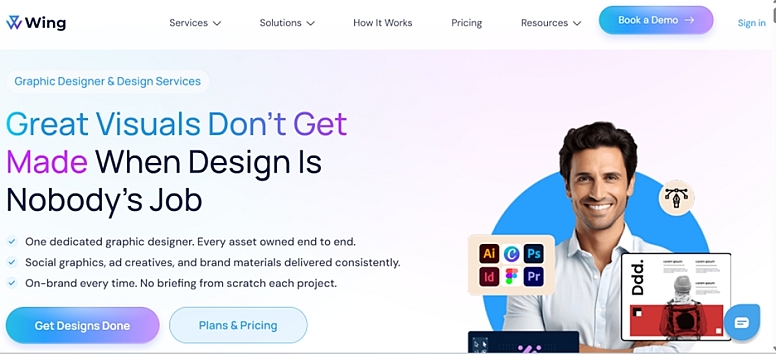
You get one designer working exclusively on your account during scheduled hours, building familiarity with your brand style and asset library over time.
Pricing is published and month-to-month. Full-time runs $1,799 per month for 160 hours and part-time $1,099 per month for 80 hours, with matching completed within 48 hours and no contract.
The hours model matters here. Subscription services cap output by daily request slots or creative hours, whereas 160 monthly hours is a defined block of a person's time you direct as you choose.
That structure suits teams looking to hire graphic designer support rather than buy request credits. You set the priorities instead of queuing behind other accounts.
Scope spans five areas. Brand and social design, marketing collateral, layout work including infographics and presentations, creative production covering photo editing and file optimization, plus ongoing asset management.
That last one is genuinely differentiating. Organizing the design library, maintaining style guides, and keeping asset folders current is unglamorous work that pooled queues rarely absorb.
Your designer works inside your existing tools rather than a proprietary portal, covering Canva, Adobe Illustrator, Photoshop, and Google Drive.
Support wraps around the role. Free replacement within 24 hours if the fit is wrong, a Customer Success Manager, supervision by Team Captains and Supervisors, plus the Wing Workspace App for task visibility.
Security is documented. Wing is ISO 27001 compliant and SOC 2 certified, with NDAs, role-based access controls, and design files encrypted in transit and at rest.
Best for: teams with continuous design volume who want brand consistency from one person rather than a rotating queue.
Consider: if your volume is genuinely occasional, a pooled subscription at a lower entry price will cost less.
2. Design Pickle
Design Pickle created this category when Russ Perry launched it in 2015, and it remains the best-known name. Its process is mature and its output consistent.
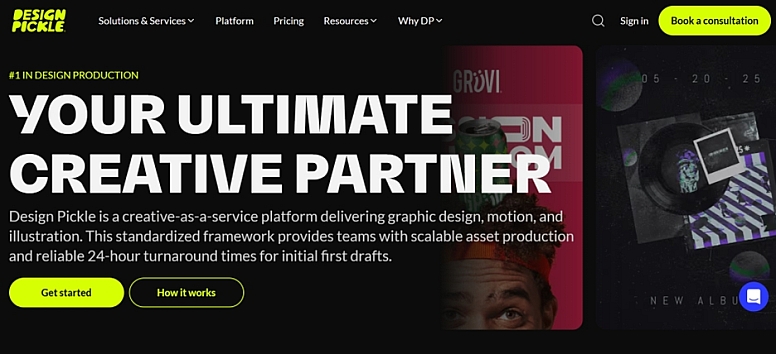
The pricing model changed significantly in 2025. Rather than a flat fee for unlimited requests, it now bills based on daily creative hours purchased, with platform access charged separately at roughly $119 to $299 per month.
That shift raised the floor considerably. Minimum realistic production cost now sits near $1,918 per month against roughly $1,349 for the plan it replaced.
Best for: high-volume teams that value process maturity and consistent throughput.
Consider: it is now among the most expensive options in the category, and the hours-based structure requires more forecasting than a flat fee.
3. Penji
Penji is the lowest entry point among major providers at around $499 per month, which makes it the common starting place for small teams testing the model.
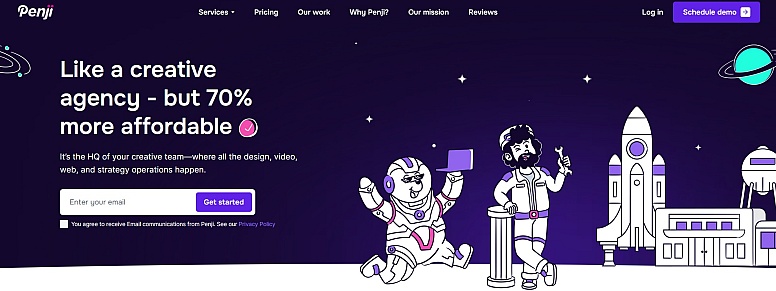
Output covers graphic design, branding, ads, and illustration, with web and motion on higher tiers.
First drafts typically arrive within 24 to 48 hours, and the company reports serving over 10,000 businesses.
The entry tier is genuinely entry-level, with no creative director, no photography, and no video. Higher plans reach $995 and above once those become necessary.
Best for: small businesses and agencies needing steady volume of straightforward assets on a tight budget.
Consider: pooled queue delivery at the entry tier means brand consistency depends on documentation rather than on one person knowing your style.
4. ManyPixels
ManyPixels occupies the middle, starting around $549 per month with quality assurance included on every plan. A project manager routes requests, and a reviewer checks work before delivery.
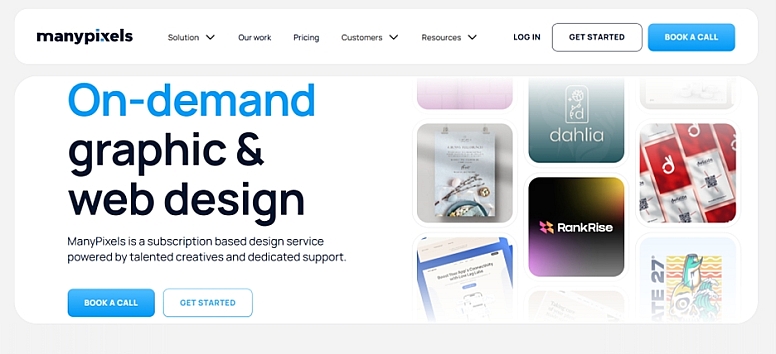
Two features stand out. A dedicated designer option is available from roughly $1,299 per month, and the service offers a pause feature at $10 per month that retains your files and request history.
That pause option is unusual. Most competitors require you to cancel entirely, which loses your history, so seasonal businesses feel that difference.
Best for: teams wanting a middle path, or businesses with seasonal design volume that fluctuates through the year.
Consider: the dedicated tier costs roughly double the entry plan, which narrows the gap to full-time alternatives.
5. Superside
Superside operates closer to an enterprise creative agency than a subscription. Each client gets a modular team including a project manager and design director alongside the designers.
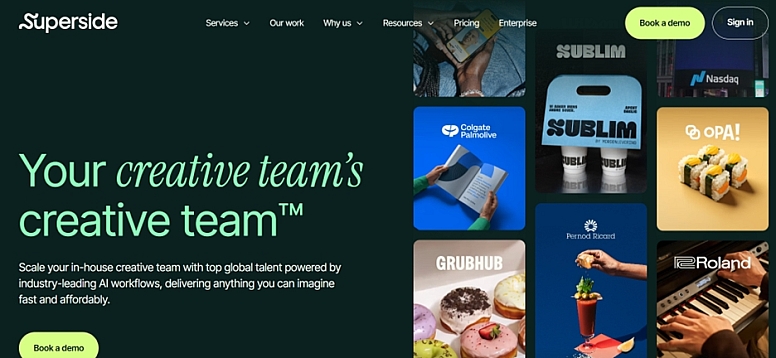
Pricing reflects that positioning, starting around $5,000 per month and scaling well beyond depending on volume and team composition. A twelve-month contract is required, with no pause mechanism.
Its client list includes large brands, and it holds a Forrester-validated return claim. The company restructured in early 2026, so confirm current team structure during evaluation.
Best for: large marketing organizations needing creative strategy alongside production.
Consider: the cost-to-output ratio does not work below roughly $2,000 per month of design spend.
The Three Delivery Models
This is the distinction worth understanding before comparing prices. Pooled queue plans are cheapest and route each request to whoever is available, which suits high-variety work but breaks consistency on brand-critical output.
Hybrid plans assign a primary designer who handles most work but hands tasks off when that person is busy. Dedicated arrangements give you one named designer who owns the account end to end.
The premium for dedicated delivery runs roughly two to two and a half times a pooled plan from the same provider.
Whether that is worth paying depends entirely on how much brand consistency matters to your output.
How to Choose
Start with your monthly volume in hours rather than requests. A request is not a unit of work, and two providers quoting unlimited requests can deliver very different amounts.
Then decide whether consistency or breadth matters more. Pooled queues handle variety well, and consistency poorly, and the reverse is true of dedicated arrangements.
Check the tooling question before you sign. A provider working inside your Canva and Adobe files fits your existing workflow, whereas a proprietary portal means exporting everything.
The right choice follows from your delivery model rather than your budget. Penji and ManyPixels suit teams needing volume at a low entry price, Design Pickle suits high-volume operations valuing process, and Superside suits enterprises needing creative strategy.
Wing Assistant fits teams that want a designer rather than a queue, with 160 hours of one person's time at $1,799 monthly and no contract.
For brand-critical work where consistency matters more than raw request volume, that structure does what pooled subscriptions structurally cannot.
Work out whether you are buying requests or buying a person. That answer narrows the list faster than any price comparison will.
Frequently Asked Questions
What does a design subscription cost in 2026? Entry plans start around $499 per month, mid-tier services run $549 to $995, dedicated designer arrangements sit between $1,099 and $1,918, and enterprise creative services begin near $5,000.
Is unlimited design really unlimited? Not in practice. Output is capped by daily request slots or creative hours, so compare on throughput rather than on the word unlimited.
What is the difference between pooled and dedicated? Pooled routes each request to whoever is free, while dedicated assigns one named designer to your account. Dedicated costs more and produces more consistent brand output.
Can AI replace a graphic designer? It can generate images and suggest layouts. It cannot apply brand guidelines consistently across months of output or adapt creative to a specific campaign brief.
Do these services work in my existing tools? It varies significantly. Some work inside your Canva, Adobe, and Drive files, while others require their own portal, so ask before committing.
How fast is turnaround? First drafts commonly arrive within 24 to 48 hours across the subscription services. Dedicated arrangements depend on how you prioritize the queue.




0.2348