



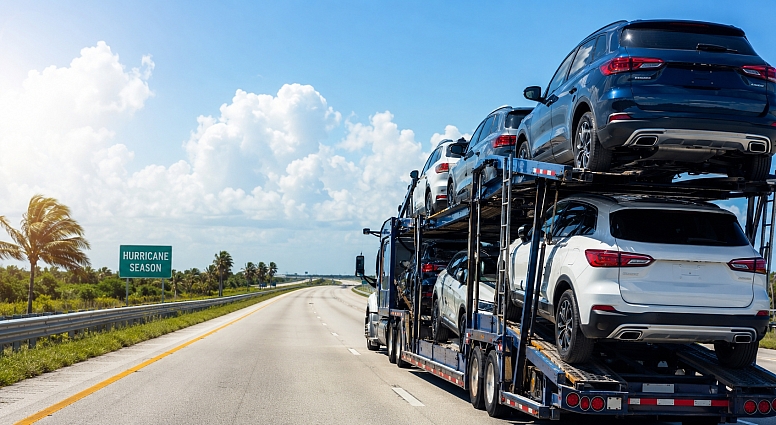
What Changes Auto Transport During Hurricane Season
Hurricane season runs from June 1 to November 30, and it bends almost every part of how auto transport works into and out of Florida.
Carriers reroute, prices swing, and pickup windows that normally close in three days can stretch to ten.
The work itself doesn't change, but the conditions around the work change a lot.
Modern vehicle shipping also depends heavily on digital infrastructure, from instant quote engines and route optimization systems to automated dispatch software and customer communication platforms.
If you're booking a Florida auto transport service during these months, the difference between a smooth experience and a frustrating one usually comes down to expectations, communication, and how well the underlying logistics systems adapt to disruption.
How pricing shifts during named storms
Pricing is the first thing most people notice.
Rates climb in the days before a named storm because demand spikes.
Snowbirds rushing south get pushed back, residents move vehicles inland, and dealerships try to relocate inventory off coastal lots.
Rates dip briefly at landfall when no one is moving, then climb again afterward when everyone wants their car back.
If you pull a quote on a Tuesday and don't lock it in, the same route can be a few hundred dollars higher by Thursday.
Many modern transport platforms now rely on dynamic pricing systems similar to airline and hotel booking platforms. These systems react quickly to changes in carrier availability, fuel pricing, route congestion, and weather-related risk.
For developers building logistics or booking platforms, hurricane season demonstrates how real-time pricing algorithms and automated quote engines behave under sudden demand pressure.
Lead times stretch out
Outside of storm activity, a Miami-to-New York run usually gets a truck assigned within 48 hours.
During an active system in the Gulf or Atlantic, that same route can sit on the board for a week because drivers won't commit to a pickup window they can't honor.
Carriers also avoid empty backhauls into evacuation zones, so southbound loads get scarce.
The fix is to book early, ideally two weeks out if you're shipping between July and October, and stay flexible on your pickup date rather than your delivery date.
For transport companies, this period also exposes weaknesses in customer communication systems. Delays become far easier to manage when platforms provide automated SMS alerts, dispatch updates, customer dashboards, and flexible scheduling interfaces.
Without these digital systems, customers often experience frustration simply because expectations were never updated in real time.
Routing changes you won't see
A driver running I-95 may swing inland to I-75 or even cut across to I-10 to dodge a band of weather.
That adds a day or two and sometimes triggers a fuel surcharge.
Trucks coming off the Florida peninsula during a mandatory evacuation sit in traffic for hours, which eats into drivers' hours-of-service clock and pushes deliveries back another day.
None of this is the carrier being difficult.
Federal DOT rules cap how long a driver can be behind the wheel, and storms compress those hours fast.
Many transport providers now rely on GPS fleet management systems, live traffic feeds, and weather API integrations to dynamically reroute drivers instead of relying on static interstate planning.
For web developers and SaaS companies working in logistics, hurricane season highlights the importance of reliable mapping tools, uptime stability, and real-time operational dashboards.
Insurance gaps worth checking
Insurance deserves a second look during this window.
Every licensed carrier carries cargo insurance, but the policy almost always excludes what insurers call "acts of God," meaning hail, flying debris, flooding, and wind damage from a named storm.
If your car is on a trailer when a hurricane crosses the route, the carrier's policy probably won't cover storm damage.
Your own comprehensive auto policy usually will, but confirm it with your agent before the truck loads.
A reputable broker like Road Runner will flag this distinction upfront rather than let you assume the cargo policy covers everything.
Many carriers now use cloud-based documentation systems and mobile inspection apps that timestamp photos and upload vehicle condition reports before transport begins.
These digital workflows make claims processing faster and reduce disputes during periods of severe weather disruption.
Why inspection photos matter more
Pre-existing dings get harder to argue about after a vehicle has been sitting on a trailer through wind and rain.
Walk around the car with the driver at pickup, photograph each panel in daylight, get the bill of lading marked accurately, and keep your copy.
Do the same at delivery before signing off.
This isn't paranoia; it's the only way a damage claim holds up if something does happen.
Digital inspection records, cloud storage, and timestamp verification systems have become increasingly important for carriers managing high shipment volumes during hurricane season.
When enclosed transport makes sense
Enclosed transport becomes a real consideration in hurricane months, even for cars that would normally ride open.
The price difference is usually 40 to 60 percent more, but for anything with fresh paint, a soft top, or significant value, the math often works.
Open carriers expose the vehicle to flying gravel and salt spray that is worse near coastal routes during high winds.
Enclosed trailers are also driven by more experienced operators who plan around the weather more aggressively.
Port shipments and island routes
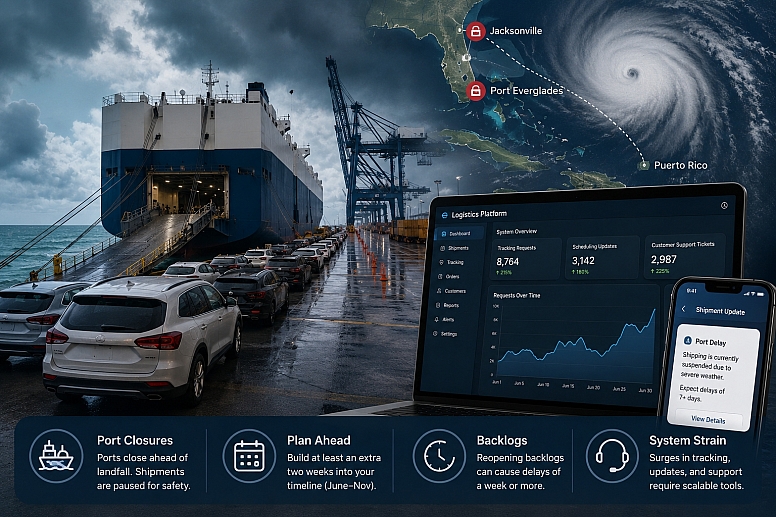
Port shipments to and from Puerto Rico, the U.S. Virgin Islands, and the Bahamas effectively stop when a storm is in the basin.
The Port of Jacksonville and Port Everglades close ahead of landfall, and the backlog after reopening can run a week or more.
If you're shipping a car off the island, build at least an extra two weeks into your timeline between June and November.
For logistics platforms, these disruptions create sudden spikes in tracking requests, scheduling updates, and customer support traffic, making scalable infrastructure especially important.
Practical habits that reduce stress
A few small choices make hurricane-season shipping much less stressful:
- Book early and offer a pickup window, not a single day
- Keep the gas tank around a quarter full, since lighter is better for the carrier, and you won't be siphoning fuel if delivery slips
- Remove toll transponders, garage remotes, and personal items, since claims for stolen contents are rarely covered
- Stay reachable by phone, because drivers reroute on short notice and need to confirm meeting points
- Check the National Hurricane Center forecast cone, not just your local weather app, before the scheduled pickup
Online tools also play a larger role during hurricane season. Quote comparison systems, shipment-tracking dashboards, route planners, and live weather-monitoring tools help reduce uncertainty for both customers and carriers.
The bottom line
The shipment will still happen.
Cars move through Florida every day of hurricane season without incident.
The difference between a smooth experience and a frustrating one is mostly about expectations, knowing the price might shift, the window might slide, and the route might bend, and planning around that instead of fighting it.
For technology companies and developers working in logistics, hurricane season is also a reminder that resilient digital infrastructure matters just as much as physical transportation networks.







0.2254