












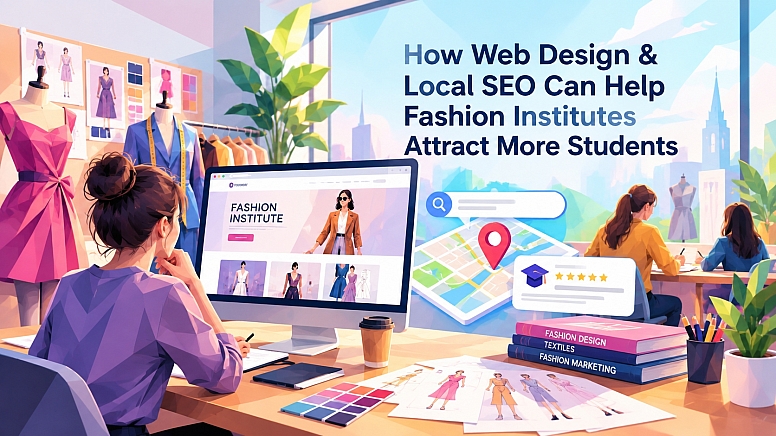
Web Design & SEO Helps Fashion Institutes Attract Students
The fashion education industry is becoming increasingly competitive. With more students exploring career opportunities in fashion design, styling, textile design, and jewellery design, institutes need more than traditional marketing to attract new students.
Today, prospective students often begin their search online. They compare institutes, explore courses, read reviews, check student portfolios, and visit websites before making an admission decision. This makes web design and local SEO valuable strategies for fashion institutes that want to increase their online visibility and attract more students.
A professional website combined with an effective local SEO strategy can help an institute build credibility, reach its target audience, and turn website visitors into genuine enquiries.
Why Online Presence Matters for Fashion Institutes
A student's journey often starts with a Google search. They may search for terms such as "fashion design institute near me," "fashion designing courses near me," or "best fashion institutes"
If an institute does not appear in relevant search results or has an outdated website, potential students may choose another institution.
A strong online presence allows a fashion design institute to showcase its courses, faculty, facilities, student work, workshops, events, and career opportunities. It also provides prospective students with the information they need to compare their options.
How Web Design Can Help Fashion Institutes
1. Create a Professional First Impression
A website is often the first interaction a prospective student has with an institute. A modern and visually appealing website can immediately communicate professionalism and credibility.
Fashion is a creative and visual industry, so the website should reflect that identity. High-quality images of student projects, fashion shows, exhibitions, workshops, classrooms, and campus activities can make the website more engaging.
At the same time, design should not come at the expense of usability. Visitors should be able to find important information quickly and navigate between pages without confusion.
2. Make Course Information Easy to Understand
Students need clear information before deciding whether a course is right for them.
Fashion institutes should create dedicated pages for their major programs and explain details such as:
- Course duration
- Eligibility requirements
- Curriculum
- Practical training
- Skills students can develop
- Career opportunities
- Admission process
- Frequently asked questions
Clear course pages can improve the user experience while also giving search engines more relevant content to understand and rank.
3. Make the Website Mobile-Friendly
A large number of students use smartphones to research educational opportunities. Therefore, a fashion institute's website should work smoothly across mobile phones, tablets, and desktops.
Important elements include fast loading times, readable text, simple navigation, optimized images, and easy-to-use enquiry forms.
If visitors struggle to use a website on their phones, they may leave before contacting the institute.
4. Showcase Student Work and Achievements
One of the best ways to build trust is by showing real examples of student work.
Fashion institutes can create dedicated sections for:
- Student portfolios
- Fashion shows
- Design exhibitions
- Industry projects
- Workshops
- Competitions
- Alumni achievements
- Student testimonials
This gives prospective students a better understanding of the institute's learning environment and the opportunities available to students.
How Local SEO Can Help Fashion Institutes
Web design helps create a strong online destination, while local SEO helps students discover the institute when searching for educational opportunities in their area.
Local SEO focuses on improving visibility for searches that include a location or indicate local intent.
1. Target Relevant Local Keywords
Fashion institutes can target keywords related to their courses and geographical area.
Examples include:
- Fashion design institute near me
- Fashion designing institute
- Fashion design courses near me
- Fashion designer course
- Fashion design institute
- Fashion courses after 12th
Location-based variations can also be incorporated where relevant.
These keywords should be used naturally across website content, page titles, headings, URLs, and other SEO elements. Excessive keyword repetition can make content difficult to read and may create a poor user experience.
2. Optimize Google Business Profile
A properly optimized Google Business Profile can help fashion institutes appear in local search results and Google Maps.
The profile should include accurate information such as the institute's:
- Name
- Address
- Phone number
- Website
- Business category
- Operating hours
- Photos
- Services or courses
Regularly updating the profile with photographs, events, announcements, and other relevant information can also help keep the listing useful for prospective students.
3. Encourage Genuine Student Reviews
Reviews can have a strong influence on a student's decision.
Prospective students may compare multiple institutes before making their choice, and genuine reviews can provide additional insight into the learning experience.
Institutes can encourage students and alumni to leave honest feedback about their experiences. Responding professionally to reviews can further demonstrate that the institute values student feedback.
Reviews should always be genuine rather than artificially created or manipulated.
4. Create Useful Local Content
Content marketing can support local SEO while answering common questions students have about fashion education.
Fashion institutes can publish articles such as:
- How to Choose the Right Fashion Design Institute
- Best Fashion Design Courses After 12th
- Career Opportunities After Studying Fashion Design
- Essential Skills Every Fashion Designer Needs
- Fashion Design vs Jewellery Design: Which Career Is Right for You?
- How to Build a Successful Fashion Design Portfolio
This type of content can attract students at different stages of their research journey.
Why Website and Local SEO Should Work Together

Web design and local SEO are most effective when they are part of one digital strategy.
Consider a student searching for a fashion design institute online. They discover an institute through local search and visit its website. If the website is slow, confusing, or missing important course information, the student may leave.
However, if the website offers a professional design, clear course details, student work, testimonials, faculty information, and simple enquiry options, the visitor has a stronger reason to continue exploring.
The student journey can look like this:
Google Search → Website Visit → Course Research → Trust Building → Enquiry → Admission
Every stage provides an opportunity for the institute to build confidence and encourage the student to take action.
Make It Easy for Students to Take Action
Once a student is interested, the next step should be simple.
Fashion institutes should provide clear calls to action throughout their website, such as:
- Enquire Now
- Apply for Admission
- Download Course Brochure
- Book a Counselling Session
- Contact the Institute
- Speak With an Advisor
Contact forms should be short and easy to complete. Phone and messaging options should also be clearly visible, particularly on mobile devices.
A strong SEO strategy can bring visitors to the website, but an effective website helps convert those visitors into enquiries.
Frequently Asked Questions
1. Why is web design important for fashion institutes?
A professional website creates a strong first impression, provides important course information, showcases student work, and makes it easier for prospective students to contact the institute.
2. What is local SEO for a fashion institute?
Local SEO helps fashion institutes become more visible when students search for fashion education services in their area or use location-based search terms.
3. Can Google Business Profile help fashion institutes attract students?
Yes. An optimized Google Business Profile can improve local visibility and provide prospective students with important information such as location, contact details, photographs, reviews, and website access.
4. What type of content should fashion institutes publish?
Institutes can publish course guides, career advice, fashion industry insights, student success stories, portfolio tips, faculty insights, and answers to common questions about fashion education.
5. How can a fashion institute generate more website enquiries?
A combination of SEO, useful content, professional web design, clear course information, strong calls to action, testimonials, and easy contact options can help increase qualified enquiries.
For fashion institutes, having a website is only the beginning. The website needs to provide a professional experience, while local SEO helps ensure that prospective students can discover the institute when searching online.
By combining professional web design, local SEO, Google Business Profile optimization, valuable content, genuine reviews, student portfolios, and clear calls to action, fashion institutes can strengthen their digital presence and attract more qualified student enquiries.
In an increasingly competitive education market, a strong online presence can help an institute stand out, build trust with prospective students, and create a smoother path from online search to admission.







0.4156