



Top Ways USA Local Backlinks Improve Project SEO Performance
Geographic relevance is still undervalued by many SEO teams that focus heavily on securing links from prominent, high-authority domains. The logic is often straightforward: if a website has strong metrics, a backlink from it must be worthwhile, regardless of where that website is based or what audience it serves.
There is some value in that approach, but it overlooks an important factor. For businesses serving defined locations, a backlink with genuine geographic relevance can be considerably more useful than a supposedly authoritative link from a site with little connection to the company's market, services, or customers.
This distinction becomes particularly important for local and regional businesses. A plumbing company serving customers in Ohio, for example, is unlikely to gain the same contextual benefit from an unrelated technology website based overseas as it would from a reputable source connected to Ohio's business community. Strong domain metrics alone do not establish local relevance. Links from websites associated with the same area, audience, or market can provide a much clearer connection between the business and the location it serves.
1. Relevance Signals That Strengthen Local Visibility
One of the clearest benefits of geographically relevant backlinks is the additional context they provide. Search engines do not evaluate links solely according to broad measures of authority; the surrounding subject matter and relationship between the linking source and destination also matter. A backlink from a website connected to the same location or market can therefore provide stronger contextual support for local visibility than a more powerful domain with no meaningful geographic connection.
This becomes especially significant when a business is competing for searches with clear local intent. Companies sometimes treat every authoritative backlink as equally valuable, but the source matters. A national technology publication mentioning a regional HVAC company may provide some authority, yet a respected local business publication discussing that HVAC company within the context of its actual service area offers a much stronger geographic connection.
2. Regional Trust Can Build Over Time
Local authority can also become stronger as relevant mentions accumulate. When regional news websites, business directories, community organizations, and other location-focused sources repeatedly reference the same company, those signals create a broader picture of the business's presence within that market. Establishing this kind of regional footprint is difficult to reproduce through generic outreach that pays little attention to geography.
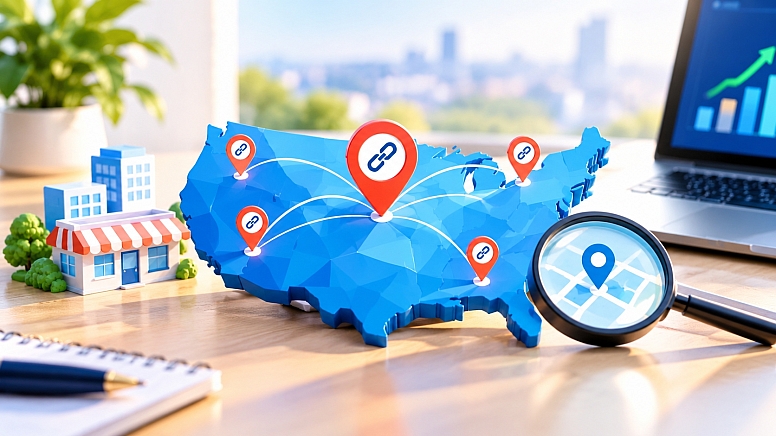
This is one reason USA Local backlinks can be a useful component of a focused SEO campaign. Businesses targeting a particular American market need more than broad national exposure; they also need signals that connect their website with the locations and communities they serve. Links from sources that are genuinely connected to the target region can reinforce that association in ways that an untargeted link campaign may struggle to achieve.
Building this regional trust is not an overnight process. It can take months, and sometimes considerably longer, for a consistent pattern of local references to develop. However, a backlink profile supported by legitimate regional relationships can provide a more coherent foundation than a collection of unrelated links gathered simply because the referring domains have strong metrics.
3. Referral Visitors With Greater Conversion Potential
Geographic relevance can also influence the quality of visitors generated by backlinks. A national publication may send substantial traffic, but that traffic has limited commercial value when most visitors have no connection to the area where a regional business operates. By comparison, referral traffic from a regional publication, local business resource, or community website can put the business in front of people who are much more likely to need its services.
A smaller audience is not necessarily a disadvantage when that audience is closely aligned with the company's service area. A visitor who actually lives in the relevant market and has a genuine need for the advertised service can be considerably more valuable than a much larger volume of visitors who have no realistic reason to become customers. A regional chamber of commerce site, for instance, can introduce a business to a highly relevant audience even if the resulting traffic numbers appear modest in comparison with those of a major national publication.
Once conversions become the primary objective, the relevance of incoming visitors matters far more than simply accumulating impressive traffic figures. High visitor numbers are of limited practical value when the audience has little opportunity or intention to purchase from the business.
This is an area where broad link-building campaigns can sometimes produce disappointing results. A report may show impressive referral numbers, but those figures do not necessarily translate into enquiries or sales when the people arriving on the website are located far outside the company's service area or have no relevant purchasing need.
4. A More Coherent and Natural Backlink Profile
Local links can also contribute to a backlink profile that makes sense in the context of the business itself. Consider a website whose incoming links come almost entirely from unrelated industries and widely scattered locations. Even when those individual links are legitimate, the overall profile may lack a clear relationship with the company's market.
A healthier profile can include a combination of authoritative national sources and relevant regional websites. This creates a more believable picture of a company that operates within a real community while also earning recognition beyond its immediate area. The objective is not to collect links from one geographic category exclusively, but to build a varied profile in which the location-specific links have a logical place.
Search engines have become increasingly capable of evaluating patterns across backlink profiles rather than viewing every link in isolation. Geographic consistency is therefore another useful consideration when building links. A collection of genuine references from relevant locations can be much more coherent than a profile assembled from unrelated websites solely because their authority metrics look attractive.
5. Greater Resilience as Search Algorithms Change
Another consideration is long-term sustainability. Relevant local backlinks earned through legitimate business relationships, regional coverage, community participation, and relevant publications have a clear reason to exist beyond SEO alone. That can make them a more durable part of a website's overall link profile than placements that have little connection to the business or its audience.
Search engines continue to refine how they evaluate unnatural and manipulative link patterns. When a backlink reflects a genuine relationship between a business and a regional organization, publication, directory, or community, there is an underlying reason for the mention. That context can make the link more defensible than an irrelevant placement created primarily to influence rankings.
The challenge is that obtaining these links generally requires a different type of outreach. Local link building is often more relationship-oriented than large-scale national campaigns. Instead of sending the same message to hundreds of unrelated websites, businesses may need to build connections with local publishers, organizations, companies, and community groups.
That could involve sponsoring a regional event, earning coverage from a local news publication, securing appropriate listings in location-specific directories, or developing relationships with complementary businesses that have a legitimate reason to mention one another. These activities can take more time than mass outreach, but the resulting links can have greater contextual value and a clearer connection to the business's actual market.
For project-based SEO campaigns in particular, this local-first strategy can be especially useful. Campaigns focused on defined service areas, regional expansion, or entry into a particular market benefit from backlinks that reinforce the location being targeted. During the early stages of a project, when a website is establishing its presence and authority within a particular market, relevant regional references can complement broader authority-building efforts while keeping the backlink profile connected to the business's objectives.
National link building still has an important role for businesses that genuinely serve customers across large geographic areas. However, when a campaign is focused on a particular American state, city, or region, geographic relevance should not be treated as an afterthought. Building relationships with sources connected to the target market can strengthen search relevance, attract more qualified referral visitors, and contribute to a backlink profile that supports sustainable visibility rather than relying on generic authority alone.







0.3392