



Practical Steps to Take Right After Scammers Steal Crypto
Discovering that cryptocurrency has been stolen can be overwhelming, but the actions taken during the first few hours often play an important role in any subsequent investigation. Unlike traditional bank transfers, blockchain transactions are permanent, making it essential to preserve wallet information, transaction records, and communications before additional evidence disappears.
Industry research has also shown that personal wallet compromises accounted for more than 23% of all stolen cryptocurrency activity during 2025, reflecting a growing shift toward attacks on individual users rather than just exchanges.
Understanding how to recover stolen crypto begins with acting quickly and methodically rather than making rushed decisions. Reporting the incident to relevant exchanges, law enforcement agencies, and blockchain investigators may improve the chances of tracing assets before they move through multiple wallets. Equally important is avoiding so-called recovery services that promise guaranteed results, as many are scams designed to exploit victims a second time.
Secure Accounts First
Before making public posts or sending more messages, victims should secure wallets, exchanges, email, and phone access. Guides on how to recover stolen crypto often stress speed, records, and account safety because scammers may return. Password resets, device scans, and new authentication settings can stop added losses before reports begin.
Stop All Contact
Scammers may promise refunds, taxes, or account releases after the theft. These claims usually push victims into another payment. No victim should share seed phrases, passwords, identity files, or screen access. All chats should be saved before blocking accounts. Silence can feel risky, but continued contact often gives criminals more chances to pressure, confuse, or threaten the target.
Preserve Every Record
Evidence matters most during the first hours. Victims should save wallet addresses, transaction hashes, exchange names, screenshots, emails, phone numbers, websites, and chat handles. Files should keep original dates where possible. A simple timeline helps investigators follow the money. Each entry can include the date, platform, amount, asset type, and what the scammer wanted at that stage.
Keep Clean Copies
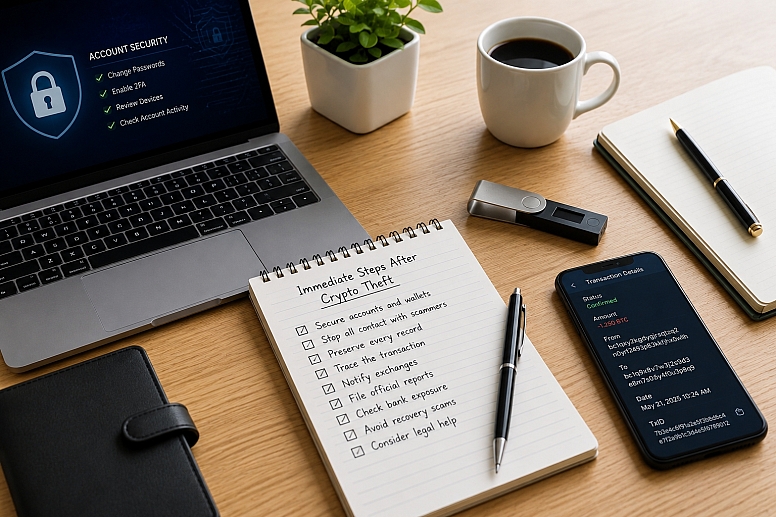
Screenshots should include full browser bars, user profiles, and visible dates. Exported chat logs are useful when platforms allow downloads. Victims should avoid editing images because changes can raise questions later. Separate folders for transactions, conversations, identity documents, and reports make evidence easier to review. Cloud backup can protect files if a device fails or becomes locked.
Trace the Transaction
Blockchain records can show where stolen funds moved after the theft. Victims can copy transaction identifiers from wallet apps or exchange histories. Public explorers may reveal destination addresses, asset swaps, and later transfers. This information does not guarantee a return, but it can support exchange freezes, police reports, and civil claims. Accuracy matters, so copied strings should be checked twice.
Do Not Move More Funds
Some victims try test transfers to confirm addresses or bait scammers. That can create more loss and muddy records. Remaining assets should move only after a careful security review. If a wallet seed phrase was exposed, funds may need to be transferred to a clean wallet. That step should happen from a secure device, with fresh credentials.
Notify Exchanges Fast
If stolen funds reached a known exchange, victims should contact that platform quickly. Support teams may request transaction hashes, police report numbers, identification, and screenshots. The message should stay factual and brief. Exchanges cannot always freeze assets, but rapid notice improves the chance of review. Victims should keep ticket numbers and save every response from support staff.
Document Every Communication
Every email, support ticket, and response received after reporting the theft should be saved in one place. Victims should record reference numbers, dates, and the names of any exchanges or organisations contacted. Keeping a complete communication history can help avoid repeated requests for the same information and provides a clear record if the case later involves investigators, legal representatives, or financial institutions.
File Official Reports
Law enforcement reports create a formal record of the crime. In the United States, victims can report cryptocurrency fraud through the Internet Crime Complaint Center. Local police may also issue a report number for banks, exchanges, or lawyers. Reports should include wallet addresses, transaction identifiers, scam websites, contact details, and total losses. Clear records help agencies connect related cases.
Check Bank Exposure
Crypto scams often involve bank wires, card payments, payment apps, or loans. Victims should contact financial institutions if any linked account was used. Banks may flag transfers, replace cards, close exposed accounts, or review fraud claims. Credit reports should be monitored if identity documents were shared. A fraud alert can reduce the risk of new accounts being opened in a victim’s name.
Avoid Recovery Scams
After a loss, fake recovery agents often appear through search results, social media, or direct messages. They may claim insider exchange access, hacking skills, or guaranteed results. Upfront fees, secrecy demands, and pressure tactics are serious warnings. Real recovery work depends on evidence, reports, legal options, and cooperation from platforms. Guarantees should be treated as another danger sign.
Consider Legal Help
Legal review can help victims assess civil claims, preservation letters, exchange notices, and possible claims against involved parties. Counsel may also organize evidence for investigators or request information through formal channels. The best time to ask is early, before records vanish or accounts close. Legal action is not always practical, but informed advice can prevent costly mistakes.
Conclusion
Stolen crypto is hard to recover, yet the first response still matters. Victims should secure accounts, preserve records, trace transactions, notify platforms, and file reports without delay. Each step builds a clearer trail and reduces the chance of further loss. Recovery may involve exchanges, investigators, banks, and legal teams. Calm documentation, fast reporting, and caution around follow-up offers give victims the strongest position.







0.1903