



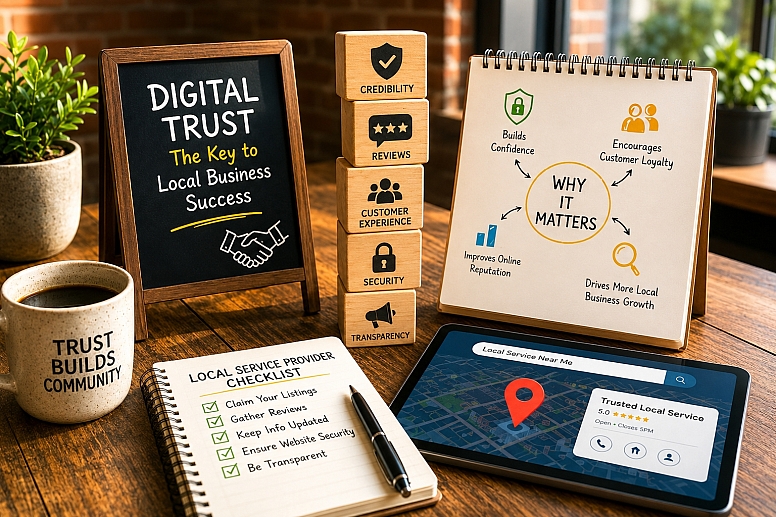
The Importance of Digital Trust for Local Service Providers
A local customer often decides before anyone answers the phone. The website opens, the reviews are skimmed, and the address is checked. Something feels solid, or it does not.
A customer rarely stops to name each detail. The form submits properly, the services make sense, and the reviews sound like they came from real people. That quiet sense of reliability often does more than any polished slogan.
What Is Digital Trust and Why Does It Matter for Local Businesses?
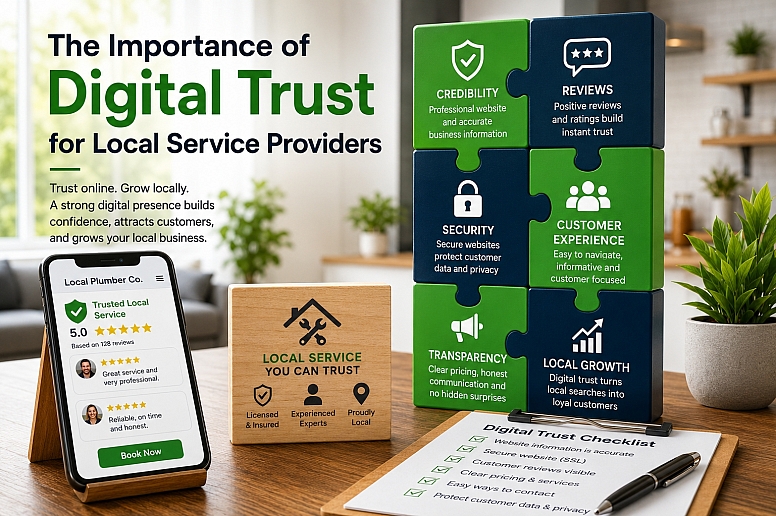
Digital trust is the confidence that a business will handle online contact with the same care expected during the actual service.
That includes security, but it also reaches into ordinary details. Is the phone number current? Does the booking page explain what happens next?
A plumber may receive a home address before the first visit. A clinic may collect personal details before an appointment. A document service may need identification. The customer has already handed over something valuable before meeting anyone.
Small inconsistencies can make that handover feel risky. A website lists one trading name while the invoice uses another. A social profile shows hours that no longer apply. What's more, the contact page promises same-day replies, but the first response comes three days later.
Most customers will not investigate. They will close the tab.
How Online Reviews and Reputation Shape Customer Trust
Reviews show future customers what happens after the booking. A comment about punctuality, clean work, or a clearly explained fee often says more than a page of promotional copy.
The most persuasive reviews contain small details. A customer mentions that the electrician called before arriving. Another says the dentist explained two options without rushing. Those details feel lived.
A flawless rating is not always more convincing. One critical review, followed by a calm response, may show more about the business than fifty vague five-star comments.
- A sound review routine may include:
- Asking genuine customers after the work is complete
- Replying without arguing
- Moving private details away from the public thread
- Watching for repeated complaints
Repeated complaints deserve attention. Three comments about late arrivals may point to scheduling trouble. Several mentions of surprise charges may indicate that the quoting process is unclear.
A polished reply does not fix either issue. A better process does.
The Role of Website Security and Transparency in Building Digital Trust
Most customers will never inspect the code behind a website. They still notice when the experience feels unsafe.
A browser warning appears. A form refreshes and wipes everything already entered. A payment page opens on an unfamiliar domain. The customer pauses. Sometimes that pause ends the enquiry.
Basic security should stay in the background. Pages load through HTTPS. Software receives updates. Account access is limited to staff who need it. Former team members lose access when they leave.
Transparency works alongside those safeguards. People lose patience when basic details are buried. A phone number, cancellation terms and the area covered should be easy to spot. If the price changes with distance, timing or the size of the job, that should be clear before anyone books.
- Useful details often include:
- Current contact information
- Clear opening hours
- Service locations
- Privacy wording
- Deposit terms
Cancellation rules
Forms also need restraint. A quote request for garden maintenance does not need a date of birth. Asking only for information that serves a clear purpose shows that privacy has been considered.
How Local Service Providers Can Use Social Proof to Gain Credibility

Social proof works when it answers a question already sitting in the customer’s mind.
Has the provider handled this kind of job before? Does the team really serve the local area? Will the finished result resemble the photos?
A roofer can show damaged flashing before repair and the finished section afterwards. A cleaner can describe the condition of a property at the first visit. A mobile service can explain the appointment handled without sharing names or addresses.
Specific examples carry more weight than broad claims. A short case note can explain the problem, the work completed, and what changed afterward. It does not need to sound like an award entry.
Permission still matters. A customer may be pleased with a renovation and still prefer that the home is not shown online. The same applies to testimonials and job details.
A page crowded with popups, badges, and scrolling review boxes can feel anxious. A few relevant examples beside the service they support usually land better.
Common Mistakes That Damage Digital Trust for Local Businesses
Trust often slips through ordinary neglect.
A contact form stops sending emails after a plugin update. Nobody notices for two weeks. The business assumes enquiries have slowed. Customers assume nobody is listening.
Old information causes the same kind of damage. A former phone number remains on one directory. Holiday hours are wrong. A staff profile shows someone who left months ago.
Then there are the shortcuts that create doubt immediately. Fake countdown timers. Copied testimonials. Stock photographs presented as completed local work. Guarantees with no explanation of what they cover.
Hidden costs cause particular trouble. A customer may accept a call-out fee or deposit when it is explained early. The same charge feels dishonest when it appears after the work has started.
For services involving identity and sensitive documents, such as online notarization, privacy wording and clear process information carry extra weight. Customers remember when the next step feels safe, straightforward, and properly handled.
Response promises should match reality. An automatic message that says “within one hour” becomes irritating when the inbox is checked the following afternoon.
Privacy mistakes leave a deeper mark. Posting an address in a review reply or publishing a project image without permission can turn a small disagreement into a lasting problem.
Once that confidence is gone, a discount rarely repairs it.
How to Build and Maintain Long-Term Digital Trust as a Local Provider
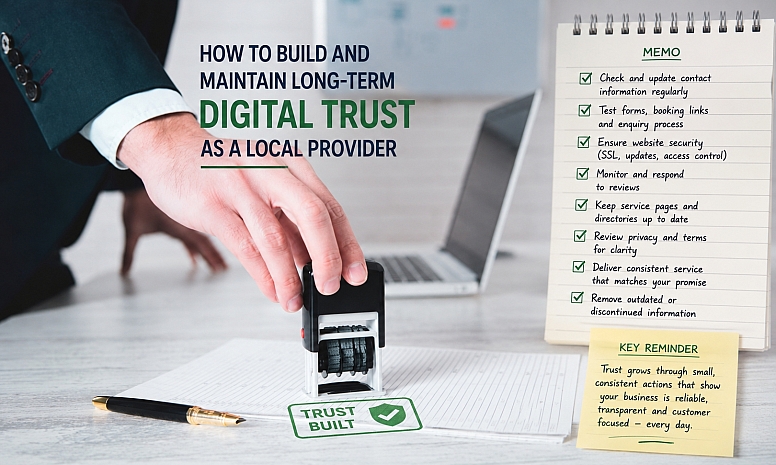
Digital trust needs routine attention. A website launch does not finish the work.
Staff change. Services expand. Directory listings drift. Small errors return.
A monthly check can cover the contact form, phone number, opening hours, and map listing. Someone should submit a real test enquiry and confirm that it reaches the right inbox. Booking links should be opened on a phone, not only on an office computer.
Reviews deserve a wider look too. One complaint may be an exception. The same complaint four times is probably a process issue.
Old pages need attention as well. A discontinued service should not remain live simply because it still attracts visits. The page can be updated or redirected rather than leaving customers to discover the change after making contact.
The service itself remains the strongest proof. A secure website cannot make up for missed appointments. A polished profile cannot hide surprise charges forever. Trust lasts when the online promise matches the visit, the invoice and the follow-up.
The work is rarely exciting. A wrong holiday time gets corrected. A broken link is replaced. A review receives a sensible reply. Those small jobs keep a dependable business dependable online.
Digital trust grows through accurate details, secure contact points, and service that matches the promise made online. Local providers do not need a flawless image. They need a believable one.







0.208