



How Voice Assistants Are Transforming the Modern Smart Home
Voice assistants have become an essential part of modern living by helping homeowners manage daily tasks with simple spoken commands. For anyone interested in setting up voice control with Total Connect, a detailed integration guide explains how Amazon Alexa can work alongside a compatible security platform to provide convenient hands-free control and automation features.
As smart home technology continues to evolve, voice assistants are no longer limited to answering questions or playing music but are becoming central hubs for connected devices throughout the home.
The Evolution of Voice Assistant Technology
Voice assistants have advanced significantly over the past decade, moving beyond basic commands to understand natural language and respond more accurately. Improvements in artificial intelligence and cloud computing have made these systems faster, more reliable, and capable of handling increasingly complex requests.
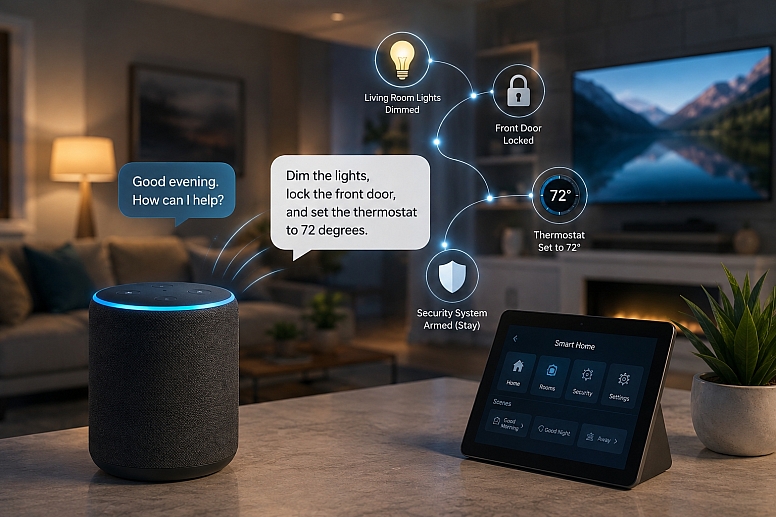
Modern voice assistants can communicate with a growing ecosystem of compatible devices, creating a seamless experience for homeowners. Instead of managing separate applications for every smart device, users can issue a single command that triggers multiple actions at once, saving both time and effort.
Creating a More Connected Living Environment
One of the greatest advantages of voice assistants is their ability to bring multiple smart devices together under one convenient interface. Lighting, thermostats, entertainment systems, smart locks, and security equipment can all work in harmony when integrated properly.
This level of connectivity allows homeowners to personalize routines that fit their daily schedules. A simple morning command might turn on selected lights, adjust the indoor temperature, and provide a weather update, while an evening routine can prepare the home for a comfortable and secure night.
Improving Home Security Through Voice Control
Security has become one of the most valuable applications for voice assistant technology. Homeowners appreciate the convenience of checking compatible devices, activating automation routines, or managing certain security functions without reaching for a smartphone.
When integrated with supported smart security platforms, voice assistants provide another layer of accessibility that complements existing mobile applications. Rather than replacing traditional security controls, voice functionality offers an additional method for interacting with connected systems in situations where hands-free operation is beneficial.
Simplifying Everyday Household Tasks
Voice assistants help reduce the number of repetitive tasks that homeowners perform throughout the day. Simple requests such as adjusting lighting, playing music, creating shopping lists, or setting reminders become nearly effortless when handled through voice commands.
These conveniences become even more valuable in busy households where multitasking is common. Parents preparing meals, professionals working from home, or individuals carrying groceries can control various devices without interrupting what they are already doing.
Supporting Energy Efficiency
Smart homes are increasingly focused on reducing unnecessary energy consumption, and voice assistants play an important role in achieving that goal. Connected lighting systems, smart plugs, and programmable thermostats can all respond instantly to spoken commands or automated schedules.
Instead of accidentally leaving lights or appliances running, homeowners can quickly turn them off from another room using only their voice. Over time, these small improvements contribute to lower utility costs while encouraging more efficient use of household resources.
Making Technology More Accessible
Voice-controlled technology has also improved accessibility for many individuals who may have difficulty using traditional controls. Speaking a simple command is often easier than navigating multiple mobile applications or reaching physical switches located throughout the home.
Older adults and individuals with mobility limitations can benefit in particular from this convenience. As voice recognition technology continues to improve, these systems are becoming more accurate across different speaking styles and everyday conversational language.
The Future of Smart Home Innovation
The capabilities of voice assistants continue to expand as manufacturers develop new integrations and smarter automation features. Artificial intelligence is expected to make these systems even more responsive by learning user preferences and anticipating common routines without requiring repeated manual input.
Future smart homes will likely become even more interconnected as additional devices adopt standardized communication protocols. This growing compatibility will give homeowners greater flexibility when choosing products while creating a more unified and intuitive smart home experience.
Voice assistants have transformed the way people interact with their homes by making connected technology more convenient, efficient, and accessible. From managing lighting and entertainment to supporting smart security systems and energy efficiency, these platforms continue to demonstrate their value as central components of the modern smart home.
As innovation continues and compatibility expands, voice assistants will remain at the forefront of creating smarter, more responsive living environments that simplify everyday life.







0.2057