












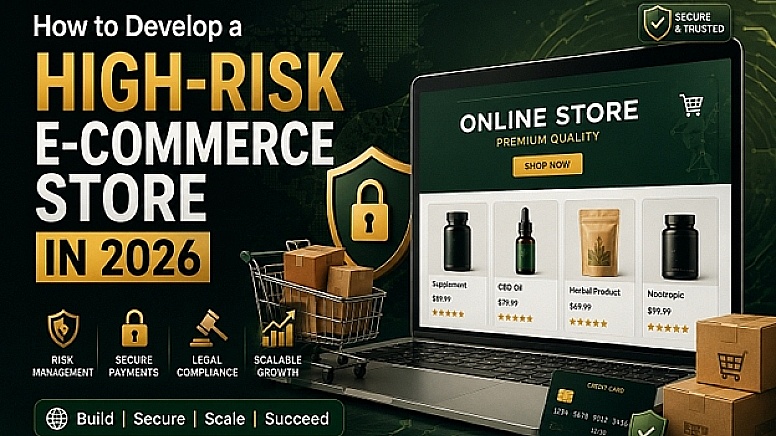
How to Develop a High-Risk E-Commerce Store
The e-commerce industry continues to grow, but not every online business faces the same challenges. Some merchants operate in specialised or heavily regulated markets where payment processing, platform policies, legal requirements, and technical infrastructure require additional attention.
Financial institutions and payment providers may classify certain businesses as "high-risk" because of factors such as elevated chargeback rates, regulatory complexity, product restrictions, or increased fraud exposure.
This classification can create additional obstacles, including stricter payment processing requirements, platform limitations, and more demanding compliance procedures.
However, operating in a high-risk category doesn't mean an online business cannot succeed. With careful planning, suitable technology and a clear understanding of the relevant regulations, merchants can build reliable and scalable e-commerce operations.
This guide explains how to approach the development process, from choosing an appropriate platform to managing payments, security, and ongoing maintenance.
What Makes an E-Commerce Store "High-Risk"?
Before considering the development process, it's worth understanding how businesses receive a high-risk classification.
Financial institutions, payment processors and e-commerce service providers assess merchants according to various factors. These can include transaction patterns, chargeback history, regulatory requirements, the nature of the products being sold, and the markets in which the business operates.
Some specialised retail and wellness businesses may face additional scrutiny because of product-specific regulations, advertising restrictions or requirements relating to customer information and product labelling.
Being classified as high-risk doesn't automatically mean a business is operating improperly. It simply means that additional checks, specialised payment arrangements or more comprehensive operational safeguards may be necessary.
Let's look at the steps involved in developing a high-risk eCommerce store in 2026.
Step 1: Choose the Right E-Commerce Platform
Not all e-commerce platforms offer the same level of flexibility. When building a store in a specialised or regulated market, it's important to consider platform policies, payment compatibility, and the ability to implement additional compliance features.
Two commonly considered options are WooCommerce and Shopify.
WooCommerce
WooCommerce is built on WordPress and offers considerable flexibility for businesses that require customised e-commerce functionality.
Because it can be self-hosted, merchants have greater control over their website configuration, plugins, checkout experience and integrations. This can make it a suitable option for businesses that need specialised payment arrangements, customised customer verification procedures or additional product information.
However, greater flexibility also means greater responsibility. Merchants must manage website security, software updates, hosting arrangements and the technical requirements of their chosen payment providers.
Shopify
Shopify provides a managed e-commerce environment with hosting, security features and a range of integrated business tools.
It can be suitable for certain specialised businesses, provided their products and operations comply with Shopify's applicable policies. Merchants should pay particular attention to payment service restrictions, as eligibility for Shopify Payments is not necessarily the same as eligibility to use the Shopify platform with an approved third-party payment provider.
A custom-built Shopify store can offer additional flexibility in terms of design and functionality, but custom development does not override platform policies or payment provider restrictions.
Whichever platform you choose, consider whether it supports the features your business requires, including customised checkout processes, customer verification, geographical sales restrictions, and compatible payment integrations.
Step 2: Secure a Suitable Payment Processor
Payment processing is often one of the most challenging aspects of establishing a high-risk e-commerce business.
Some mainstream payment providers have restrictions on particular business categories, and merchants may find that their applications require additional documentation or underwriting.
Rather than assuming that a standard payment account will be sufficient, investigate providers that have experience working with your particular industry.
When evaluating high-risk payment processors, consider the following:
- Transparent pricing: Understand transaction fees, monthly charges, reserves, and any additional processing costs.
- Industry experience: Check whether the provider accepts businesses operating in your particular market.
- Chargeback management: Look for tools and services that help monitor and manage disputed transactions.
- Payment flexibility: Consider whether the provider supports the payment methods and currencies your customers need.
- Settlement arrangements: Understand payment schedules, reserve requirements, and withdrawal conditions.
- Customer support: Reliable technical and account support can be particularly important when operating in a specialised market.
Payment providers worth researching include Paay, Durango Merchant Services, PaymentCloud and eMerchantBroker. However, acceptance policies vary, and merchants should confirm eligibility directly with each provider before making a decision.
It's also sensible to begin the application process early. Underwriting can involve additional documentation and checks, so allowing sufficient time can help prevent payment processing from becoming a last-minute obstacle to launching your store.
Step 3: Build for Compliance from Day One
Compliance should be considered during the initial planning stages rather than added after the website has been completed.
The requirements will depend on the products being sold, the business location, and the countries or regions in which customers are located.
Depending on the circumstances, a store may need:
- Appropriate customer verification procedures.
- Geographical restrictions for products or services that cannot be sold in certain locations.
- Accurate product descriptions and labelling.
- Evidence supporting product-related claims.
- Clear terms and conditions, privacy policies and refund procedures.
- Appropriate disclosures and customer information.
- Secure handling of personal and payment information.
Businesses selling wellness-related products should pay particular attention to advertising and product claims. In the United States, for example, the FDA and FTC have different responsibilities relating to product regulation, labelling and advertising.
Health-related claims must be truthful and adequately supported. Simply adding a disclaimer to a product page does not make an otherwise misleading claim acceptable.
Regulations can also differ considerably between countries and individual states. A product that can legally be sold in one location may be subject to additional restrictions elsewhere.
Taking the time to understand these requirements helps protect the business, its customers and its relationships with payment providers.
Step 4: Partner with Developers Who Understand Your Industry
Choosing the right development partner can make a significant difference to the success of a specialised e-commerce project.
A general web development agency may be perfectly capable of building a standard online shop, but businesses with additional payment, security, or compliance requirements often need more specialised technical knowledge.
Working with developers who understand the challenges of high-risk e-commerce can help reduce unnecessary complications during the development process.
Companies such as High Stack Solutions provide development services for businesses operating in specialised e-commerce markets.
When evaluating a potential development partner, consider their experience with:
- Customised e-commerce platforms and checkout systems.
- Payment gateway integrations.
- Customer verification and access controls.
- Product information and compliance-related website features.
- Website security and data protection.
- Ongoing maintenance and technical support.
Ask to see relevant examples of previous projects and clarify exactly what is included in the development agreement.
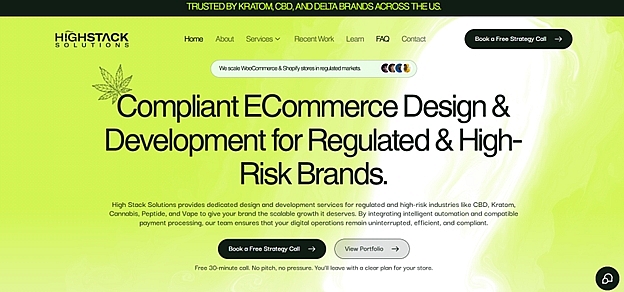
A reliable development partner should also be clear about the distinction between technical implementation and legal compliance. Building a website with appropriate features does not, by itself, guarantee that a business meets every applicable regulatory requirement.
Step 5: Implement Strong Security and Fraud Prevention
Security is an important consideration for every online business, but merchants operating in higher-risk categories may face additional scrutiny from payment providers.
A secure development stack should include several layers of protection.
At a minimum, consider implementing:
- SSL certificates and HTTPS: Encrypt information exchanged between customers and your website.
- PCI DSS-compliant payment arrangements: Use appropriately compliant payment providers and understand your own responsibilities as a merchant.
- Address Verification Service (AVS): Where supported, check billing address information during card transactions.
- Card security checks: Use available verification measures to help identify suspicious transactions.
- Fraud monitoring: Consider tools that assess transaction patterns and flag potentially unusual activity.
- Secure account management: Protect administrative accounts with strong authentication and appropriate access permissions.
- Regular backups: Maintain reliable backups and a recovery plan in case of technical problems.
Fraud prevention should also extend beyond the checkout page. Clear product descriptions, transparent delivery information, accessible customer support, and straightforward refund procedures can help reduce misunderstandings and transaction disputes.
Chargeback monitoring is particularly important because excessive disputes can affect payment processing arrangements and potentially lead to additional restrictions.
Step 6: Optimise for SEO and Conversions in a Restricted Landscape
Businesses operating in specialised markets may encounter additional advertising restrictions. Depending on the products and services offered, advertising platforms such as Google Ads and Meta may limit certain campaigns or require additional approval.
This makes organic search and content marketing valuable components of a long-term marketing strategy.
Rather than relying entirely on paid advertising, businesses can develop useful website content that answers customer questions and provides clear information about their products and services.
Consider the following SEO and conversion strategies:
- Informative content: Publish useful articles, guides and answers to common customer questions.
- Detailed product pages: Provide accurate descriptions, specifications and relevant supporting information.
- Technical SEO: Maintain fast loading times, mobile compatibility and a logical website structure.
- Internal linking: Connect related articles and product pages to help visitors navigate the website.
- Trust signals: Display genuine customer reviews, relevant certifications and transparent business information where appropriate.
- Clear checkout processes: Make purchasing straightforward while retaining any necessary verification and security procedures.
- Transparent policies: Ensure customers can easily find delivery, returns, privacy and contact information.
Conversion rate optimisation is especially important when businesses have fewer opportunities to use paid advertising. Improving the customer experience can help make better use of the visitors already reaching the website.
Step 7: Plan for Ongoing Maintenance and Regulatory Adaptability
Launching an e-commerce website is only the beginning. Businesses operating in specialised markets must remain prepared for changes to technology, payment requirements and applicable regulations.
New legislation, revised platform policies and changes to payment provider terms can all affect how an online store operates.
Ongoing maintenance should therefore be included in the original development budget.
Important considerations include:
- Regular software updates and security patching.
- Periodic reviews of website functionality and compliance requirements.
- Monitoring payment processing performance and transaction disputes.
- Maintaining website backups and uptime protection.
- Reviewing product information and customer-facing policies.
- Monitoring website performance and SEO health.
- Updating geographical restrictions when applicable requirements change.
Businesses should also establish a process for reviewing changes that could affect their products, payment arrangements or ability to serve particular markets.
A well-maintained store is generally easier to manage, more resilient to technical problems and better positioned to adapt as business requirements evolve.
Building a high-risk e-commerce store in 2026 requires careful planning, appropriate technical infrastructure and a clear understanding of the responsibilities involved.
Although specialised businesses can face additional challenges, choosing the right platform, securing suitable payment processing and establishing sound operational procedures can make the development process considerably more manageable.
The most important considerations are straightforward: select a platform that supports your business model, work with payment providers that understand your industry, address compliance requirements from the beginning, and invest in reliable security and ongoing maintenance.
A successful e-commerce operation is not simply about getting a website online. It's about creating a dependable business infrastructure that can support customers, protect transactions, and adapt to changing requirements over time.




0.4181