



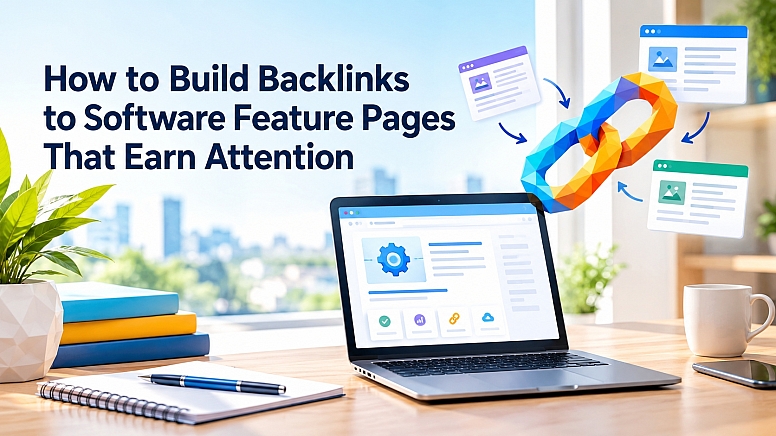
How to Build Backlinks to Software Pages That Earn Attention
Software feature pages can be some of the most useful pages on a SaaS website, and some of the hardest to promote. They explain what a product does, who it helps, and why a buyer might choose it. Yet a page that reads like a product pitch rarely attracts links on its own. To build backlinks to software feature pages, connect each page to a real problem and give publishers a clear reason to reference it.
This takes more than sending outreach emails. It starts with choosing the right pages, improving what they offer readers, and finding relevant sites that can genuinely benefit from linking to them.
Why feature pages need a different approach
A feature page is designed to help a potential customer understand a product. A publisher, meanwhile, is usually looking for evidence, guidance, or a resource that will make their own article more useful. A page focused entirely on product capabilities may not meet that need, even if the feature is valuable.
That does not mean feature pages cannot earn links. It means the link-building plan should be shaped around the page’s subject and audience. A project-management feature page might be relevant to articles about workflow bottlenecks, while a reporting feature page could support content about measuring campaign performance.
For a broader look at matching link tactics to different SaaS page types, this page-by-page SaaS link-building strategy offers a useful framework.
Choose pages with a clear link opportunity
Not every feature URL should be an immediate outreach target. Start by reviewing the pages that matter most to your business, then ask whether each one provides something a third party might reasonably cite.
- Is the feature easy to understand? Explain the problem it solves before listing functions or technical details.
- Does the page offer useful information? Add examples, workflow guidance, integrations, limitations, or other details that help readers assess the topic.
- Is the page relevant beyond your product? A page about a broadly understood challenge has more potential audiences than one built around internal feature terminology.
- Does it support a meaningful business goal? Prioritise pages connected to products, audiences or conversion paths that matter, rather than pursuing links for every URL.
If a page has little independent value, improve it before building a campaign around it. Clear explanations, original screenshots, practical use cases, and accurate documentation can make it more useful to both prospects and publishers.
Create a reason for other sites to cite the page
A link request is stronger when it points to a resource that adds something to the destination article. Consider what your team can contribute that is specific to the feature: a short demonstration, a comparison of different workflows, a small dataset, an expert explanation, or a template that helps people apply the idea.
For instance, a software company with an automation feature could publish a concise guide to identifying repetitive tasks, including examples of what should and should not be automated. The feature page can then explain how the product supports that process. This is more helpful than asking a writer to link to a page that only repeats marketing claims.
Design can matter here, too. A diagram, product walkthrough, or clear visual comparison may make an explanation easier to use. When a team needs outside creative help, it can review examples of freelance design services and other independent work. Osdire, for example, covers a wide range of freelance categories, giving businesses a way to explore different kinds of project support.
Find relevant publishers and use specific outreach
Build a shortlist of websites that already discuss the problem your feature addresses. These may include industry publications, specialist blogs, professional communities, or educational resources. Relevance matters more than a large prospect list: a link from a site whose readers care about the topic is more likely to make sense than an unrelated mention.

Read the article you plan to contact someone about. Identify a specific point where your resource could add value, and explain that connection briefly. A useful message might point out that the article discusses a process your guide illustrates, then suggest the resource as an optional addition. Avoid generic pitches that could be sent to any website, and do not imply that an editor owes you a link.
Other routes can include contributing expert commentary, sharing original research, answering journalist requests, or updating an existing resource with new information. The goal is to earn a reference because it improves the reader’s experience.
Measure the results beyond link counts
Track links by the page they point to, the referring site, and the context in which they appear. Also monitor referral visits, relevant keyword visibility, and whether the page helps users move toward a product decision. These signals provide a fuller picture than counting new backlinks alone.
Review link quality regularly. A natural link on a useful, relevant page is generally more valuable than a placement that exists only to manipulate rankings. If a campaign attracts links but no relevant visitors, reassess the page, audience, and outreach angle before scaling it.
Make the page worth recommending
Effective SaaS link building is a combination of page quality, a credible reason to cite the page, and thoughtful outreach. Choose feature pages with clear relevance, add information that helps readers, and approach publishers with a specific contribution rather than a demand.
When the page genuinely supports the wider conversation, backlinks become a result of usefulness, not the only reason the page exists.




0.3403