


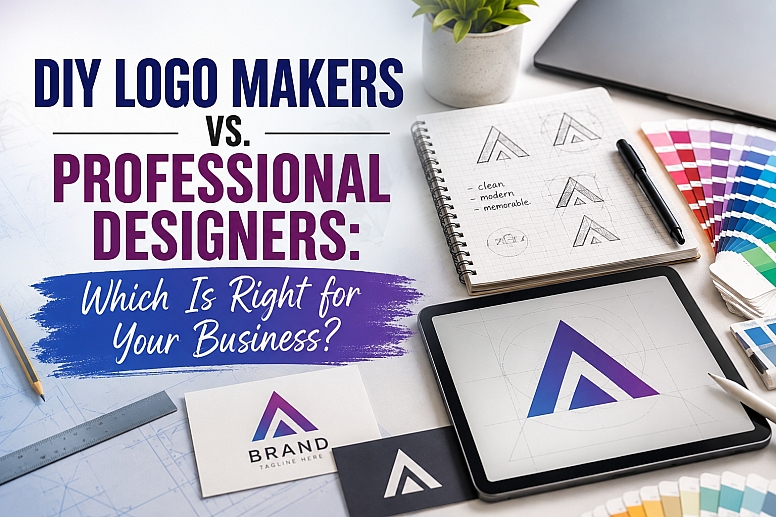
DIY Logo Makers vs. Professional Designers
So you need a logo. Maybe you're launching a new business, or maybe your current logo just looks off. Either way, you're stuck at a crossroads that almost every business owner hits eventually: do you type your business name into a free logo maker and call it a day, or do you bring in a real designer to build something from scratch?
Which Is Right for Your Business?
Both paths can work. But they work for very different reasons, and picking the wrong one can cost you more than a few dollars saved. Before you decide, it helps to know what each option actually gives you, because a logo design company and a template tool aren't solving the same problem, even though they both spit out a picture at the end.
Let's break it down honestly.
What DIY Logo Makers Actually Do
DIY logo makers are everywhere now. You type in your business name, pick an industry, and the tool shows you a grid of pre-made icons and fonts mashed together. Within minutes, you've got a logo.
The appeal is obvious. It's fast, it's cheap (sometimes free), and you don't have to explain your vision to anyone. For a weekend side hustle, a school project, or a quick placeholder while you figure out your actual branding, this can be perfectly fine.
The Catch With Templates
Here's the thing nobody tells you upfront: these tools pull from the same limited pool of icons and layouts. That means your unique logo might look eerily similar to five other businesses in your area, or worse, a competitor's. Trademark issues have popped up more than once because two businesses picked nearly identical logo maker combinations without knowing it.
There's also the depth problem. A logo isn't just a pretty icon. It needs to work in black and white, shrink down to a tiny favicon, scale up on a billboard, and still feel consistent across everything from your website to your coffee cups. Most DIY tools generate a static image, not a flexible brand asset. You're basically buying a picture, not a system.
What Professional Designers Bring to the Table
A professional designer starts somewhere completely different: with questions. Who's your customer? What do you want people to feel when they see your brand? Who are your competitors, and how do you want to stand apart from them?
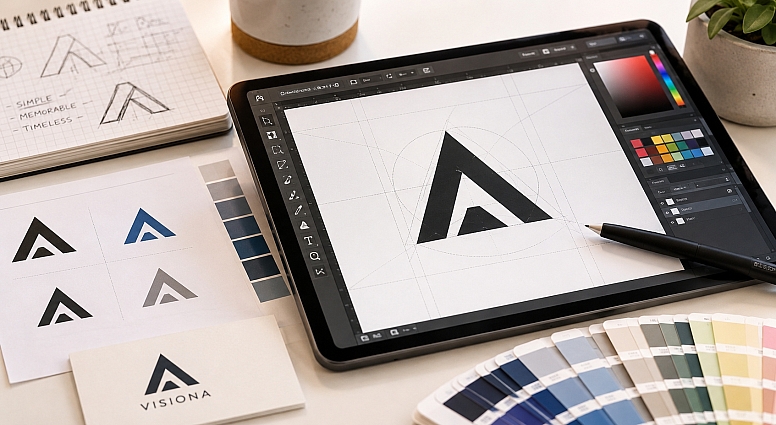
That research phase is invisible in the final product, but it's the reason a professionally designed logo tends to age well and actually mean something. Designers aren't just arranging shapes; they're translating your business's personality into visual form.
The Process Looks Different Too
Instead of picking from a dropdown menu, you'll usually go through a few rounds of concepts, feedback, and revisions. It takes longer, sure. A week or two isn't unusual for a solid project. But you end up with original artwork, full file formats for print and digital use, and often a style guide that covers colors, fonts, and spacing rules so your branding stays consistent no matter who's using it later.
If you're curious about how brand psychology actually influences logo design, the American Marketing Association has published some interesting research on how visual identity affects consumer trust over time.
Cost: The Real Comparison
Let's talk numbers, because this is usually the deciding factor.
DIY tools: basic package with usable file formats. Professional design work can run anywhere from a few hundred dollars for a freelancer to several thousand for an agency handling your full brand identity.
That's a big gap. But cost per logo isn't really the right way to measure it. The better question is: what's this logo going to represent, and for how long?
If you're testing an idea before committing fully, spending big on branding might be premature. If you're building something you plan to grow for years, a cheap logo you'll need to redo later isn't actually saving you money; it's just delaying the expense.
When DIY Makes Sense
DIY logo makers are a smart choice when:
- You're validating a business idea and don't know yet if it'll stick
- You need something functional immediately, like for a pop-up event
- Your budget genuinely can't stretch further right now
- You're comfortable with a generic look for now and plan to rebrand later
There's no shame in this. Plenty of successful companies started with a scrappy logo and upgraded once they had traction.
When You Need a Professional
On the other hand, hiring a designer or working with a branding agency makes more sense when:
- You're launching something you expect to grow and stick around
- You need your logo to work across many formats: packaging, signage, apps, merchandise
- You want something that can't be easily confused with a competitor
- Your brand identity needs to reflect a specific tone, story, or market position that a template simply can't capture
This is also where the return on investment tends to show up. A well-designed identity doesn't just look nicer; it can influence how much people trust your brand before they've even bought anything. Nielsen's research on branding consistency has shown how visual identity affects purchase decisions, which says a lot about why bigger, more established businesses rarely rely on templated logos.
So, Which One Is Right for You?
Honestly, it depends less on your budget and more on your timeline and ambitions.
If you're not sure your business idea will survive the next six months, don't overspend on branding yet. Use a DIY tool, get moving, and revisit it once you have real customers and real feedback.
But if you already know this business is the one, if you're building something you want to last, it's worth investing in design that's made specifically for you. A logo that's built with intention tends to carry your brand further than one pulled from a template library.
Either way, the goal is the same: a logo that actually represents what you're building, not just something that fills the space where a logo is supposed to go.



0.2803